AHM V1.6 Delivers Powerful New Tools for Large-Scale, Flexible Installations

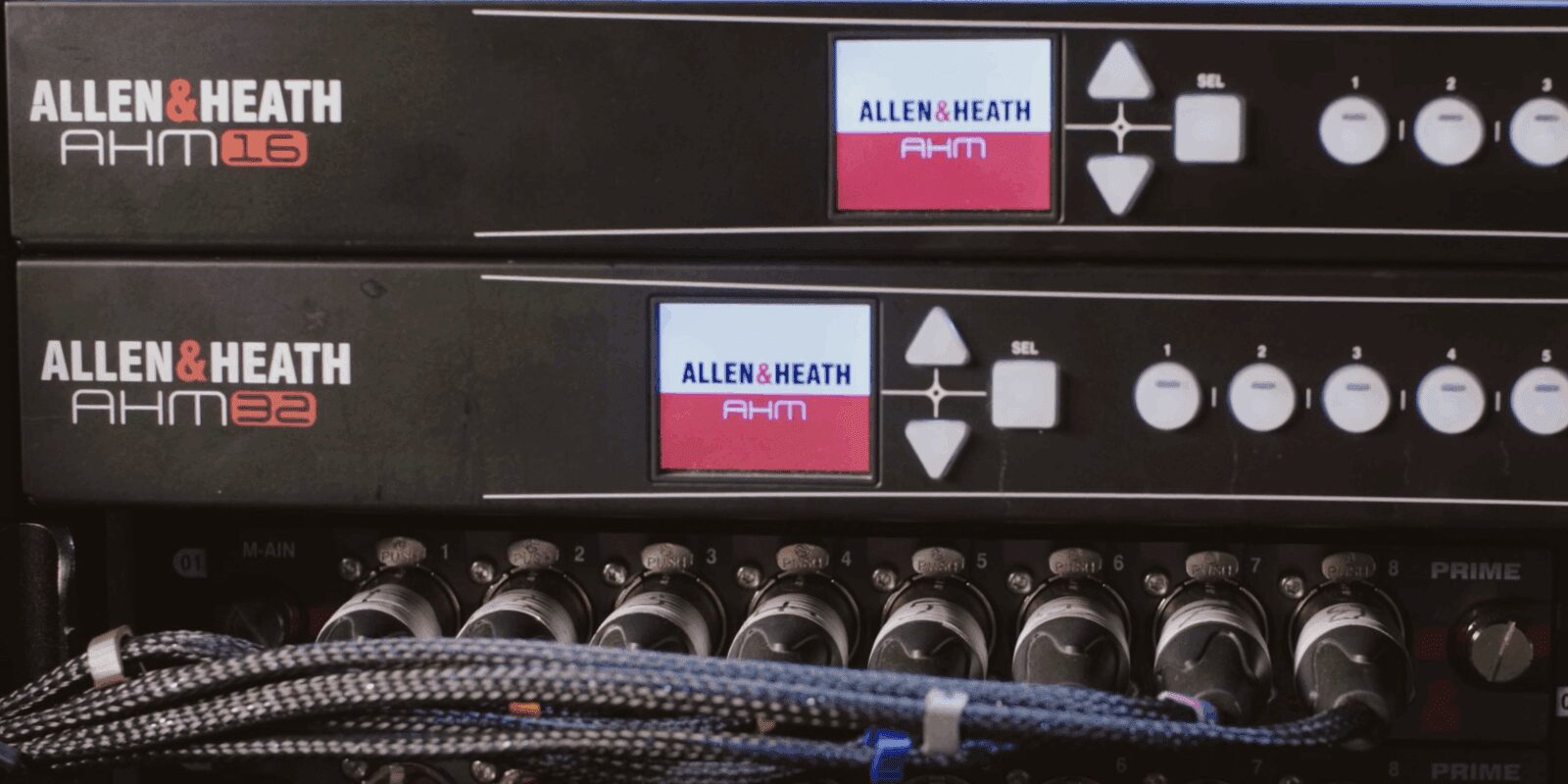
Allen & Heath has announced the release of firmware V1.6 for its AHM series of audio matrix processors, introducing a suite of new features – including Unit Stacking, expanded third-party control, and integrated feedback suppression – further bridging the worlds of commercial integration and systems engineering - offering new levels of control and scalability.
“With AHM V1.6, we’re expanding the possibilities for both commercial integrators and system engineers,” says Samantha Potter, Commercial Audio Manager at Allen & Heath. “It’s a release that puts the best of both worlds into a single platform, opening up new applications in hospitality, entertainment, houses of worship, education, and more.”
The headline feature in V1.6 is Unit Stacking, a major step forward in scalability for the platform. For the first time, multiple AHM processors can be managed, monitored, and controlled from a single Project within System Manager, introducing custom views of channels across the entire system. Unit Stacking empowers integrators and system engineers to design and operate larger, more complex systems with the same speed and simplicity expected from smaller systems.
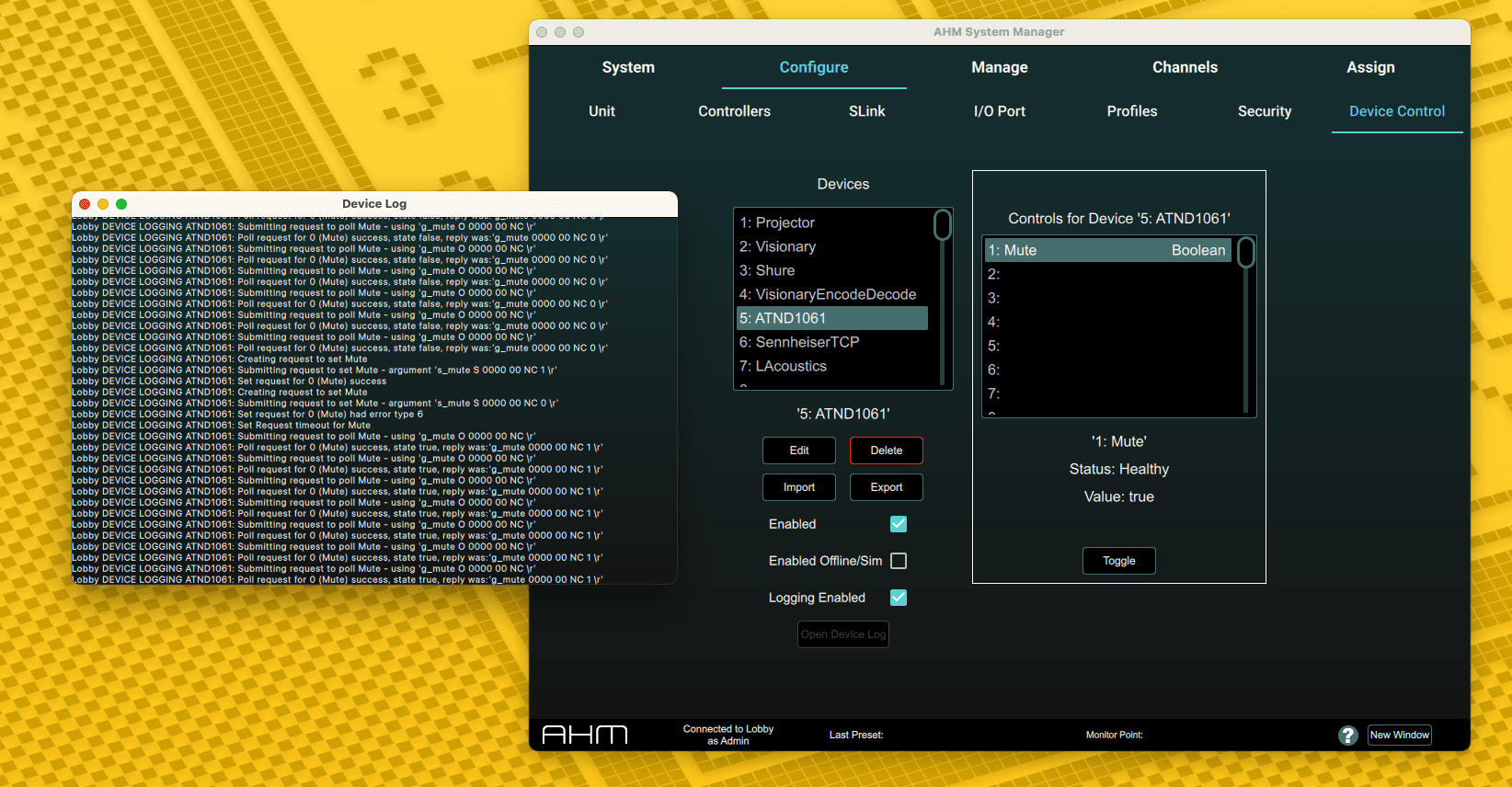
V1.6 also brings expanded third-party control and monitoring, enabling AHM to integrate tightly with devices such as displays, video switchers, microphones, and amplifiers. Additionally, device behaviour can be monitored directly from IP controllers, providing end-users with greater visibility and confidence in day-to-day operation.
Making its debut in V1.6, Feedback Suppression helps to tame problem frequencies and prevent unwanted feedback across up to eight zones. Available on AHM-32 and AHM-64 units fitted with the AEC/Processing Expansion card, Feedback Suppression provides peace of mind for integrators, ensuring stability in acoustically challenging environments, with even the most eccentric or unpredictable speakers.
Additional features and improvements include new ganging options for levels, delays, and dynamics, building on the EQ ganging introduced in V1.5. Workflow refinements such as socket labelling, processing block visibility, global mute and level controls, and playback looping further streamline system design and management. V1.6 also adds support for embedded recall with dLive and Avantis systems, VLAN compatibility for SLink and gigaACE connections, and a host of other improvements.
“We are continuing to develop AHM in direct response to the needs of our customers,” adds Potter. “With V1.6 we’re proving that powerful, scalable systems don’t have to come at the expense of workflow speed or audio quality, ensuring integrators and system engineers can deliver outstanding results in any application.”

We’re a working touring and events production company founded in 2019 by sound engineers with many years of experience.
We’re very selective about the products we sell. Everything we supply we use ourselves on our tours, events and productions. This means we can offer a level of buying advice and aftersales support that can’t be beaten.
We’re official dealers of brands such as Allen & Heath, Audio Technica and sE Electronics. We also stock other leading brands including Shure, Sennheiser, RCF, Martin Audio and Chauvet Professional.