


Home » Guides » Mixers & PA Systems »
Active vs Passive PA Speakers: Which Should You Buy?
The most common question at the trade counter, answered honestly. What powered and passive actually mean, where each one genuinely wins, and a straight recommendation for bands, churches, venues and DJs.
~11 min read · Updated July 2026 · By the Stage Supply team
In this guide: What active means · What passive means · The trade-off table · Where actives win · Where passives win · Biamping and DSP · Adding subwoofers · Which should you buy? · Common mistakes · FAQ
Every PA purchase starts with the same fork in the road: powered boxes with amplifiers built in, or passive boxes fed from a separate amp rack. Neither is “better”. They are two different ways of packaging the same signal chain, and each one wins in specific situations. The internet answer is usually “just buy actives”, which is right for a lot of buyers and badly wrong for others. This guide sets out the real trade-offs the way we would across the counter, then gives a straight recommendation by use case.
What “Active” or “Powered” Actually Means
An active (powered) speaker has the amplification built into the cabinet. Plug in mains power, feed it a line-level signal from your mixer over an XLR cable, and it makes sound. The two terms are used interchangeably in the trade: “powered” describes the box having its own amp, “active” strictly describes the crossover coming before the amplification, but in practice every powered PA box on the market is both.
Inside a modern active box you get more than just an amp module. A typical two-way powered speaker contains:
- Separate amplifier channels for the woofer and the compression driver, each sized for its driver.
- A DSP-based active crossover splitting the signal into low and high bands at line level, before amplification, with steeper and cleaner filter slopes than a passive network can manage.
- Factory-tuned processing: EQ voicing matched to that exact cabinet, driver time alignment, and often selectable presets for full-range use, monitor use, or running with a subwoofer.
- Limiting and protection set by the manufacturer to keep the amps from destroying the drivers, plus thermal protection for the electronics.
That last point is the quiet superpower of active boxes. The manufacturer knows exactly which amplifier is driving exactly which driver, so the limiters can be set right on the edge of the cabinet’s capability. You get maximum safe output with no system engineering on your part. It is very hard to blow up a decent active speaker through normal misuse.
What “Passive” Means
A passive speaker is just drivers, a passive crossover network and connectors in a cabinet. It has no mains connection and makes no sound on its own. You drive it from an external power amplifier over speaker cable, usually terminated in speakON connectors, and the crossover inside the box splits the amplified signal between the woofer and the horn.
Because the amplification, processing and protection live outside the box, a passive system puts you (or your installer) in charge of system design. You choose the amplifier, you decide how many cabinets hang off each channel, and you set up any DSP, EQ and limiting in an outboard system processor or in the amplifier itself, since many modern install and touring amps have DSP built in. That freedom is the whole point of passive: one amp rack can drive many boxes, components can be serviced or swapped independently, and the loudspeakers themselves contain nothing that wears out electronically.
Passive is not the “old” technology
A common beginner assumption is that passive speakers are the outdated option and active is the upgrade. In reality most large-scale professional systems, fixed installations and touring rigs are built around passive cabinets driven from DSP amplifier racks, because that architecture scales and services better. Active and passive coexist at every quality level; they solve different problems.
Trade-offs, Side by Side
Here is the full comparison, without the marketing gloss from either camp:
| Factor | Active (powered) | Passive + amp rack |
|---|---|---|
| Setup simplicity | Mixer to speaker over XLR, power on, done. No system knowledge needed. | Amp gain structure, crossover settings and speaker wiring are your job. |
| Cabling | Two runs per box: signal (XLR) plus mains power to every cabinet, including flown or pole-mounted ones. | One speaker line per box (or daisy-chained). No mains at the speaker positions. |
| Weight distribution | Amp weight is in every cabinet you lift onto a pole or into a van. | Cabinets are lighter; the weight sits in an amp rack that stays on wheels at floor level. |
| DSP and limiting | Built in and factory-matched to the drivers. Protection is essentially foolproof. | Outboard, in a processor or DSP amp. More capable and more flexible, but only as good as the person who sets it up. |
| Failure modes and repair | Amp failure takes the whole box out of service; repair means opening the cabinet or a return to base. | Amp failure is a rack swap in minutes; the cabinet itself has almost nothing to go wrong electronically. |
| Scaling up | Every extra box brings its own amp, so cost per cabinet stays flat and mains requirements grow. | One amp channel can drive multiple cabinets (impedance permitting), so big systems get cheaper per box. |
| Monitor use | Excellent: many actives have a monitor angle and a monitor DSP preset. Needs mains at each wedge position. | Traditional wedges run several to an amp channel; tidy on stages already wired for speaker lines. |
| Fixed installation | Every speaker position needs a mains feed, and any electronics fault means working at height. | The install standard: speaker cable to the boxes, all electronics in an accessible rack. |
| Outdoor and weather | Mains and electronics exposed at every position; most powered boxes are not weather-rated. | Weatherised passive cabinets exist for permanent outdoor use, with amps kept safely indoors. |
Where Active Speakers Win
For most buyers reading this page, actives win, and it is worth being clear about why:
- Speed and simplicity: a two-box active PA is playing music within minutes of opening the van. There is no gain structure to get wrong and no amp-to-speaker matching homework.
- Mobile and self-contained work: mobile DJs, solo performers, small function bands and anyone doing several one-nighters a week benefit from fewer cases, fewer cables and less to think about at 1am load-out.
- Small venues: a pair of quality powered tops on poles covers a pub, bar or small function room cleanly with nothing else in the signal chain. Our small venue PA system guide is built around exactly this approach.
- Built-in protection: the factory limiting means an enthusiastic operator with the mixer pushed hard is far less likely to damage drivers than with a mismatched passive rig.
- Incremental growth: you can add one active box at a time (a sub, a monitor, extra fills) without redesigning an amp rack.
Where Passive Systems Win
- Fixed installations: venues, churches, sports halls and hospitality spaces almost always install passive. Speakers go on walls and ceilings with only speaker cable run to them; the amps and DSP live in a ventilated, lockable, serviceable rack. No mains at height, no electronics baking above a stage.
- Bigger systems: once you are past four or six boxes, one DSP amplifier driving multiple cabinets is tidier and more economical than a mains distro feeding a dozen powered speakers.
- Serviceability and longevity: a passive cabinet is drivers and a crossover; there is very little to fail. When an amp channel dies mid-show, you re-patch to a spare channel in seconds rather than climbing to swap a speaker.
- Weight where you want it: lighter boxes on poles and rigging, with the heavy electronics rolling on castors. Crews who lift speakers all day notice this quickly.
- Outdoor and hostile environments: weatherised passive cabinets can live outside permanently while the amplification stays indoors in the dry.
- Upgrade paths: amplifier and DSP technology moves faster than loudspeaker technology. With passive boxes you can upgrade the electronics rack later without replacing the speakers.
Biamping and DSP Crossovers: The Context Behind the Debate
Part of the reason actives sound so consistent is architectural. In a standard passive two-way box, one amplifier channel drives the full signal into a passive crossover made of coils and capacitors, which then splits the already-amplified signal between woofer and horn. Passive networks work, but they waste some power as heat, their filter slopes are relatively gentle, and their behaviour shifts slightly as the components heat up under load.
An active design does the split at line level in DSP, before amplification, then gives each driver its own dedicated amp channel. This is called biamping (or triamping in three-way boxes). It allows steep, precise crossover slopes, per-driver EQ and time alignment, and limiters tailored to each driver individually. You can biamp passive-style systems too: many higher-end passive cabinets offer a biamp mode where the internal crossover is bypassed and an external DSP processor does the splitting, with separate amp channels per driver. That is how a lot of serious install and touring systems run. The difference is that with actives the manufacturer has done all of that engineering for you and sealed it in the box, while with passives it is available to you if you have the DSP, the amp channels and the knowledge (or the manufacturer’s published presets) to use it properly.
Buying passive? Read the matching guide first
With passive speakers, choosing the right amplifier is not optional homework, it decides whether the system performs or fails. Continuous power ratings, impedance loading and limiter setup are covered step by step in our guide to matching amplifiers and speakers. Read it before you order anything.
Adding Subwoofers to Either System
Most buyers eventually add a subwoofer or two, and the active/passive choice carries through. Keep it consistent: active tops pair with active subs, passive tops pair with passive subs on a properly configured amp rack.
The standard active chain is simple: mixer output into the active sub, then the sub’s link or high-pass output up to the active top on its pole. Most active subs provide a crossover on board, filtering the lows out of the signal they pass to the tops so the tops stop wasting excursion on bass the sub is already handling. Two things matter here:
- Actually use the crossover. Running the tops full-range alongside a sub means overlapping bass, muddier low end and less headroom from the tops. Use the sub’s high-pass output, or the tops’ “with sub” DSP preset if they have one, so each box only works its own band.
- Pay attention to the crossover frequency and polarity settings. Where the manufacturer publishes a recommended crossover point for a specific top-and-sub pairing, use it. If the low end sounds thin with everything connected, try the sub’s polarity switch; the correct setting is the one that gives more bass at the crossover region, not less.
On the passive side the crossover between subs and tops is handled in the system processor or DSP amplifier, which gives you full control of crossover points, slopes, delay and limiting, and the same responsibility to set them correctly.
Which Should You Buy? By Buyer Type
Function band or working covers band
- Buy active. A pair of powered 12″ or 15″ tops, adding one or two active subs when budgets allow, is the standard working-band rig for a reason.
- Fast get-ins and get-outs matter more to a gigging band than any theoretical advantage of an amp rack.
- Powered wedges (or in-ears) for monitors keep the whole system one consistent architecture.
- Carry a mains extension and a small power distro; you now have four to six mains-hungry boxes on stage.
Church or house of worship
- Fixed system: buy passive, professionally installed. Wall and ceiling mounted passive cabinets with amps and DSP in a rack are safer, tidier and far easier to maintain than powered boxes at height, and no mains needs running to speaker positions.
- DSP in the rack also lets an installer tune the system to a difficult acoustic and lock the settings so Sunday operators cannot undo them.
- Portable outreach or hall use: buy active, because volunteer crews benefit from the plug-and-play simplicity.
Venue owner planning an installed system
- Buy passive for anything permanently rigged. Electronics stay in an accessible, ventilated rack; a failed amp channel is a re-patch, not a ladder job over a stage on a Friday night.
- One DSP amplifier platform can drive mains, fills and delays with proper zoning, delay alignment and limiting.
- Keep a couple of active boxes in the store room as flexible spares for pop-up bars, DJ booths and overflow spaces.
Mobile or club DJ
- Mobile: buy active, no contest. Tops on poles, subs beneath, controller straight in, minimal cases and the fastest possible load-out.
- Budget for a proper power distribution solution rather than a daisy-chain of domestic four-ways; a four-box active rig is four mains feeds before you plug in a single light.
- Residency in a venue with an installed system: that install will usually be passive, and it is the venue’s problem, not yours. Your job is just not to clip its inputs.
Common Mistakes to Avoid
- Forgetting the mains plan for actives. Every powered box needs a socket. A tops-and-subs rig plus powered monitors can be six or eight mains feeds, often on the opposite side of the room from the wall socket. Sort out proper power distribution and cable runs before the first gig, not during it.
- Driving passive speakers with an underpowered amp. The counterintuitive classic: small amps kill more drivers than big ones, because an amp pushed into clipping feeds distorted, compressed signal into the speaker at sustained high average power. Size the amp to the speaker’s continuous rating properly; the full method is in the amplifier matching guide.
- Mixing active tops with random passive subs (or vice versa). It can be made to work, but now you need an amp for the subs, an external crossover to split the signal, and the knowledge to set it, at which point you have bought the complexity of both architectures and the simplicity of neither. Keep one system philosophy throughout.
- Ignoring the sub crossover. Adding a sub but leaving the tops running full-range wastes the tops’ headroom and muddies the low end. Use the high-pass output or the “with sub” preset.
- Buying passive because “that is what the pros use” with no plan for the rack. The pros also bring a system tech. If nobody in your operation is comfortable with gain structure, crossovers and limiters, active boxes with factory DSP will sound better in the real world, every time.
At the professional end of the passive argument sits NEXO’s P+ Series, coaxial point-source boxes driven by NXAMP amplifier-controllers, covered in our P+ Series guide.
Popular picks from the shop
Top-selling active and passive point source speakers from our current range:
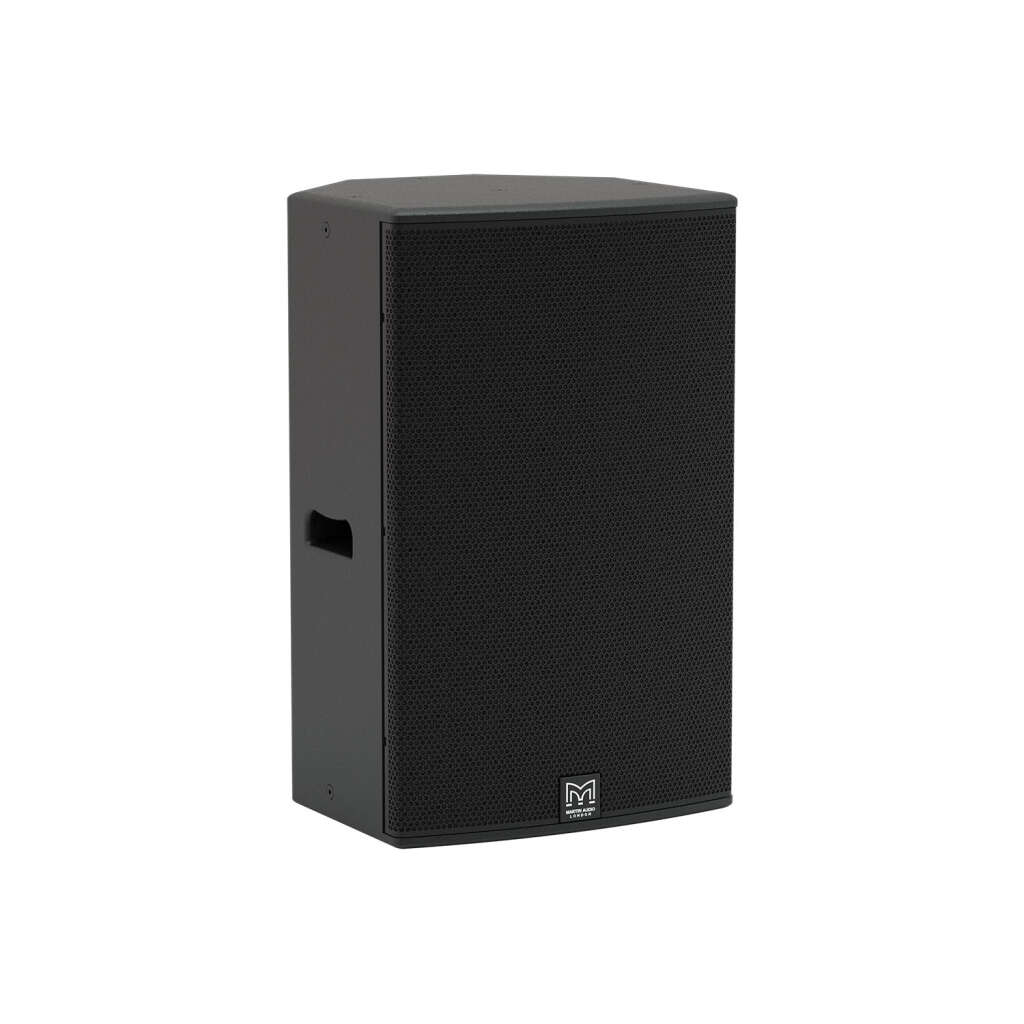
Martin Audio Blackline XP15 Active LoudspeakerView product → Electro-Voice EVIVA 15P Powered LoudspeakerView product → Martin Audio Blackline Q12 Passive SpeakerView product → Martin Audio Blackline Q8 8" Passive SpeakerView product →
Frequently Asked Questions
Are active speakers better than passive?
Neither is better; they package the same signal chain differently. Actives win on simplicity, portability and built-in protection, which suits bands, DJs and small venues. Passives win on serviceability, scaling and keeping electronics out of the speaker positions, which suits installations and larger systems.
Is “powered” the same as “active”?
For PA speakers on sale today, yes. Strictly, “powered” means the amp is in the box and “active” means the crossover works at line level before amplification, but every current powered PA speaker does both, so the terms are used interchangeably.
Can I mix active and passive speakers in one system?
Technically yes, sensibly rarely. You end up needing an amplifier and external crossover for the passive boxes anyway, so you inherit the complexity of both approaches. Keep tops, subs and monitors on one architecture unless you have a specific engineered reason not to.
Do active speakers need a mixer?
Usually, yes. Most active speakers expect a line-level signal from a mixer or controller. Many also accept a microphone directly and some have small onboard mixers with two or three inputs and Bluetooth, which can be enough for speech or solo performers.
Why do installers still fit passive speakers?
Because in a fixed install the electronics belong in an accessible rack, not sealed inside cabinets mounted at height. Passive boxes need only speaker cable run to them, there is no mains wiring at each position, faults are fixed at the rack, and the amplifier platform can be upgraded later without touching the speakers.
Do passive speakers sound better than active?
Not inherently. A well-designed active box benefits from factory-matched DSP, biamping and per-driver limiting, which is hard to beat at the same price. A well-engineered passive system with quality amplification and properly configured processing performs superbly too. Design quality and setup competence matter far more than the architecture.
Can active speakers be used outdoors?
For a dry-weather event with covered, protected power, yes. For anything permanent or exposed, no: most powered boxes are not weather-rated, and you are putting mains and electronics out in the elements. Permanent outdoor systems use weatherised passive cabinets with the amplification indoors.
What extra kit do I need for a passive system?
A power amplifier with enough continuous power per channel at your speakers’ impedance, speaker cables (typically speakON), and either a DSP-equipped amplifier or a separate system processor for EQ, crossover and limiting. Our amplifier and speaker matching guide walks through the sizing maths.
Shop this guide
Browse the ranges covered above, or talk to the team if you want a recommendation for your specific room or rig.
Active Speakers Passive Speakers Amplifiers Subwoofers System Processors


