

Home » Guides » Venue Guides »
Pub and Bar AV: Background Music, Live Bands and Sport
A pub system has three jobs that pull against each other. How zoning, speaker placement, an honest decision about live music and the right licences get all three working.
~9 min read · Updated July 2026 · By the Stage Supply team
In this guide: Three jobs · Zoning · Speakers · Sport · Live music · The vocal mic · Licences · Noise · Staff-proofing · Garden · Phased plan · Mistakes · FAQ
Three jobs, one system
Nearly every pub sound problem comes from asking one set of speakers, on one volume control, to do three different jobs.
- Background music. Even, low-level coverage everywhere, at a level people talk over. Done well, nobody notices it.
- Sport. Commentary that stays intelligible while eighty people react to it, without taking over the dining room.
- Live music or a DJ. Headroom, low-frequency extension, a performance position and a monitor path, on two nights a week.
A ceiling grid tuned for conversation cannot support a band, and two big boxes bought for the band cannot give even background coverage. Treat the pub as several small areas under independent control, then add a separate layer for the nights an act turns up. This guide covers that structure and links out to the detail, starting with our commercial and background audio guide.
Zoning: the most valuable thing you can buy
A zone is an area with its own volume, and usually its own source. With one volume control the loudest area sets the level for the whole building: staff turn it up because the bar feels flat, the snug can no longer hold a conversation so somebody turns it down, the bar sounds dead so it goes back up. That is a design fault, not poor staff discipline.
| Zone | What it needs | Source |
|---|---|---|
| Main bar | Liveliest level, switchable to TV audio | Playlist or commentary |
| Lounge or snug | Quiet and even: where people go to talk | Playlist only |
| Garden | Weather-rated speakers aimed inward, own curfew | Playlist, muted at curfew |
| Function room | Background music trading, PA layer for events | Playlist or stage input |
Most pubs land on three to five zones. Specify one spare: splitting a zone later means new cable through a trading building.
A zone mixer, or a zone mixer amplifier with amplification built in, does the work: level per zone, source per zone, and priority, so an announcement microphone ducks the music in chosen zones and last orders is heard. Wall plates give staff a level knob and a source selector limited to the range you allow, and most controllers add a web app. Scheduling and room tuning beyond that is the territory of a system processor.
Speakers: many quiet boxes, not two loud ones
Two decent speakers dropped wherever there is space give a loud end, a dead end and a level that is wrong everywhere. More, smaller speakers is the right approach: when the level in the far corner is close to the level under a speaker, nothing ever has to be loud. If a customer can find the loud table or the dead table, you have too few speakers.
Ceiling speakers give the most even coverage for the least visual intrusion where there is an accessible void. Surface-mount cabinets are the workhorse of pub installs, for exposed brick, beams and vaulted ceilings, in black or white to disappear against the wall. Compact satellites handle tight snugs. Add a subwoofer only if the venue genuinely wants weight: with a flat above it is the highest-risk purchase on this page.
Most pub installs distribute on 100V line: it handles long runs and many speakers, and the tap on each speaker lets you make the quiet corner quieter without another amplifier channel. Taps and 100V versus low impedance are covered in the background audio guide; specify install speakers and install amplifiers together.
Point cabinets at where people sit, at seated ear height, keep them off walls and floors shared with a neighbour, and avoid the position over the bar: staff stand under those speakers all shift and will turn them down, taking the room with them.
Sport: commentary that survives the crowd
The screens are easy; getting their audio into the system is where installs get untidy. There are three routes: the display’s optical or analogue output, which usually needs a converter; the set-top box’s own audio output, often cleanest because it bypasses the television’s processing and delay; or an HDMI de-embedder when neither works. Some boxes output audio only over HDMI.
Bring it to the rack as a line input, not the television’s own speakers: that is what lets you choose which match has the commentary and which zone hears it. With several boxes, feed each its own input and check lip-sync.
Volume is not the fix for intelligibility. Louder commentary makes people raise their voices, which raises crowd noise, which makes you turn it up again. What works is speakers closer to the people: two or three metres from a seated customer gives far more direct sound relative to room reflections, and direct sound carries intelligibility. Roll off the low end on the commentary path and aim a dedicated pair at the seating, not at the screens.
Two matches with two commentaries in one room is unlistenable. Give the audio to the bigger fixture, mute the rest, and store a preset, often called match mode, that mutes music in the sport zone, switches it to the TV input and leaves the lounge on the playlist. Set the level for the commentary, not the crowd reaction, or the system will strain at the goal.
Live music and DJs: install a PA, or provide the space?
This decision costs the most and gets the least thought.
Install a PA the acts will actually use
It is always there, sized and aimed for your room, out of walkways and out of reach: you set the limit and the tuning once, changeovers get faster, and you can sell the function room with a system included. Against that, it is capital spend on kit used a few nights a week, you own the maintenance, and a system that is not good enough gets ignored, because bands with their own rig often decline house PA for anything but vocals. Install one because it makes the room sellable, not to stop acts bringing gear.
Provide power, space and a vocal PA
Most pub-level acts arrive with their own system and are happy to. What they need is unglamorous: a performance area that does not block a fire exit, enough thirteen amp sockets at the stage position and not shared with the cellar plant, somewhere for a small mixer, and a clear statement of the level allowed. A vocal PA of your own then covers duos, the quiz, karaoke and DJ playback, and lives in a cupboard the rest of the week.
Run live music weekly or hire out a room and an installed system pays back; book a band once a month and the second option is right. Read our small venue PA guide for sizing and the active versus passive guide before you spend, plus the wedding and function venue guide if you sell events. Then send one page at booking: what you provide, the sockets, the load-in door, the limiter level, the curfew, and who to call.
One reliable vocal mic earns its keep
A single good handheld wireless system gets used more than anything else in the building: the quiz, karaoke, the raffle, last orders, a speech at a wake. Buy one that works every time.
- Handheld, dynamic cardioid capsule. Robust, forgiving of poor technique, far more feedback-resistant than a condenser.
- A mute switch on the transmitter. Quizmasters put the mic down while it is still open.
- Rechargeable for weekly use. A dock behind the bar beats a drawer of old alkalines.
- The right frequency band. A real buying decision in the UK: our wireless microphone buying guide covers licensed and licence-exempt options.
- A wired mic in the cupboard. The backup that costs nothing and saves an event.
Set the gain once for an untrained speaker, store it in the preset, and keep the mic out of the coverage of the speakers it feeds. If karaoke nights ring, our feedback guide deals with causes rather than symptoms; options are in wireless systems and handheld transmitters.
Licences: music, entertainment and broadcast sport
Three separate obligations get confused with each other, and holding one does not give you the others. We sell equipment, not legal advice, so confirm the detail with the bodies below.
1. Copyright in the music
Playing recorded music, or hosting live music, in a business is a public performance needing permission from the copyright holders. In the UK that permission is TheMusicLicence, issued by PPL PRS Ltd, the joint venture formed by PPL and PRS for Music so businesses hold one licence instead of two; it covers radio, television and streaming as well as live performance. PPL PRS are explicit that music heard outside a domestic environment is a public performance even where only employees hear it, under the Copyright, Designs and Patents Act 1988.
2. Your premises licence
Music can also be regulated entertainment under the Licensing Act 2003. Government guidance states that no licence is required to stage live music or play recorded music between 8am and 11pm, at alcohol on-licensed premises, with an audience of no more than 500. Outside those hours, or above that audience, it must be authorised on your premises licence. Deregulation changed nothing on an existing licence, which may still carry conditions on live music, noise or keeping doors and windows closed.
3. Broadcast sport
Televised sport shown to customers is commercial use and needs an agreement from the broadcaster, not a domestic subscription. Sky’s position is that the only legal way to show Sky Sports in licensed premises in mainland UK is a valid commercial viewing agreement from Sky Business, and that unauthorised screening can bring fines, legal costs and loss of a personal licence. Other broadcasters sell equivalent venue packages. TV Licensing separately requires a TV Licence if anyone on your premises watches TV channels, live streamed TV, or BBC iPlayer on business equipment.
None of the three substitutes for the others
TheMusicLicence does not authorise televised sport, a sport agreement does not cover your playlist, and neither has any bearing on what your premises licence permits after 11pm.
Noise, neighbours and the flat upstairs
Two mechanisms can end a live music programme. The first is your premises licence: prevention of public nuisance is a licensing objective, and conditions commonly cap amplified music, require doors and windows shut during performances, set a time for clearing the garden or require a noise limiter. The second is statutory nuisance, which councils can act on under the Environmental Protection Act 1990 independently of your licence.
If the premises has a limiter, understand before you book bands that a limiter is a bass problem first. Bass and kick drum dominate the level a sensor responds to, and they are also what travels through the structure into the flat above. That is why a band can sound modest and still cut the power, and why the fix is a low-frequency one rather than a quieter vocal. Our noise limiters guide covers the types you will meet and how to work with one.
- Decoupling beats turning down. A subwoofer on a suspended timber floor is coupled straight into the building; isolation pads or a solid floor change what the neighbour hears more than a few decibels off the master.
- Do not bolt cabinets to a party wall, and keep subs out of the corner nearest the residents.
- Fix the level once. A stored limit staff cannot exceed is a policy; a level renegotiated each week is not.
Talk to the neighbours before the first band, not after the first complaint: a stated finish time and a number you answer buys more goodwill than acoustic treatment.
Staff-proofing the system
A pub system is operated by whoever is on shift, often in their second week. Design for that person, not for the keen manager who leaves.
- Presets, not parameters. One recall per trading mode: daytime, evening, match, band night, closing. Staff pick a mode and adjust nothing.
- Limit every control you expose. Wall plates and app users get an acceptable level range and only the zones they need. Nobody should be able to unmute the garden after curfew.
- Lock the rack. Amplifiers, processing and sources in a locked cupboard: anything reachable gets adjusted.
- Label the panel, and leave one laminated page. How to switch to match mode, how to mute the garden, three checks if there is no sound, and who to call.
Garden, terrace and smoking areas
- Speakers with a stated weather rating. An indoor cabinet under an awning is not an outdoor speaker. Match the IP rating to how exposed the position is, and mount under a soffit facing down and inward.
- More speakers, lower level. Outdoors nothing reinforces the sound, so one speaker gets turned up until it carries over the boundary. Several quiet ones through the seating cover the space without broadcasting to the street.
- Its own zone and curfew. Moving people indoors at a set hour is easier when the music outside has already stopped.
- Proper cabling and power. Rated cable, weatherproof connections, RCD protection, and an electrician for anything fixed.
Lighting transforms a beer garden more cheaply than anything else. Our festoon and outdoor lighting guide covers lamp choice, IP ratings, rigging and power, and the string and festoon range has the connectable systems and heavy-duty rubber festoon that last a British winter.
A phased plan
- Zones and background music. Write down the trading areas as they actually behave and set the zones from that, including the garden even if it comes later. Specify a zone mixer or zone mixer amplifier with a spare zone, install enough speakers for even coverage, set the taps, store the presets, get TheMusicLicence in place and label the panel.
- Sport and a microphone. Bring TV audio into the rack as a line input, one per box, and check sync. Add speakers aimed at the seating if sport coverage is thin, build the match mode preset, buy one handheld wireless system with a mute switch, and sort the commercial viewing agreement and TV Licence before advertising a fixture.
- Live music and the garden. Decide whether you install a PA or provide the space, and if you install, size it for the room rather than the biggest act you can imagine. Establish the limiter position and the curfew, write the one-page spec, then add the garden zone and festoon lighting.
Common mistakes
- One zone for the whole building. The root cause of most pub audio complaints, and the one thing you cannot retrofit cheaply.
- Domestic hi-fi gear in commercial use. Not built for all-day duty, no 100V line capability, no priority input and no way to zone.
- No licences. Music, entertainment and broadcast sport are three separate obligations.
- Speakers over the bar where nobody sits. Staff turn them down and take the whole room with them.
- Booking bands before asking about the limiter. Whether one exists, and at what level, belongs in the booking conversation.
- Kit the staff cannot operate. A capable system with no presets and no labels performs worse than a simple one with both.
Popular picks from the shop
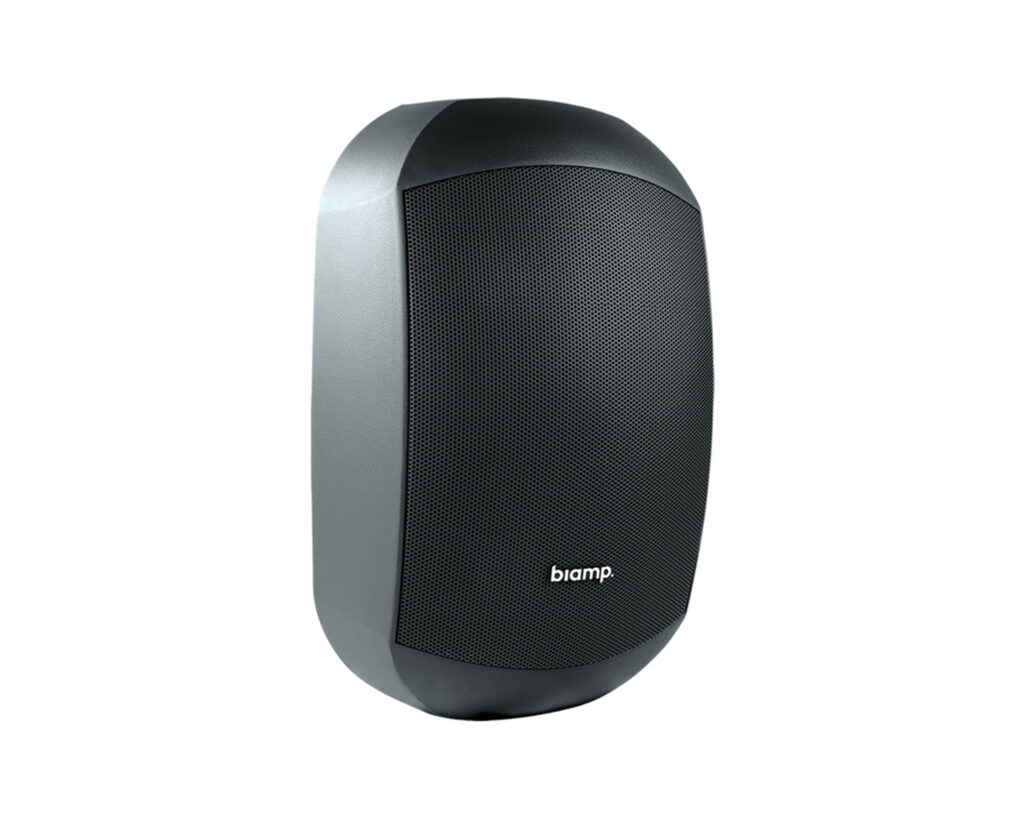
Optimal Audio Zone 4P Amplifier and Audio ControllerView product → Biamp Apart MASK6C 6.5in Clickmount Speaker IP64, BlackView product → Apart CMX20DT 8in Thin Edge Ceiling Speaker 100VView product → Shure SLXD24+/SM58 Wireless Vocal SystemView product →
Frequently asked questions
What sound system does a pub need?
A zone mixer or zone mixer amplifier feeding install speakers through each trading area, with independent level and source per zone and stored presets, plus a vocal PA and one wireless handheld mic. Add a band PA only if you programme live music often enough to justify it.
Do I need a licence to play music in my pub?
Yes. Playing recorded music or hosting live music in a business is a public performance under the Copyright, Designs and Patents Act 1988. In the UK the permission is TheMusicLicence from PPL PRS Ltd, the joint venture between PPL and PRS for Music, which covers both rights in one licence.
Do I need something extra to show football to customers?
Yes, and it is separate from the music licence. Sky states the only legal way to show Sky Sports in licensed premises in mainland UK is a valid commercial viewing agreement from Sky Business, and other broadcasters sell equivalent venue packages. A TV Licence is also needed if anyone on the premises watches TV channels, live streamed TV or BBC iPlayer on business equipment.
Should we install a PA for bands, or let them bring their own?
If you run live music weekly or hire out a function room, install one and size it for the room. If you book a band once a month, provide the space, the sockets, a curfew and a decent vocal PA, and let acts bring the rest.
Why can nobody hear the commentary during a match?
Almost always because the speakers are too far from the customers, so reflections and crowd noise swamp the direct sound, and adding level only makes people shout. Put speakers closer to the seating and give the audio to one match at a time.
Can I use ceiling speakers for live music?
No. A background system is built for even coverage at conversational level and has neither the headroom nor the low-frequency capability for a band. Keep the two layers separate.
Shop this guide
Zone control, install speakers, amplification, wireless mics and outdoor lighting, in stock.
Zone Mixers Install Install Speakers Install Amplifiers Point Source Wireless Systems String & Festoon Lighting



