


Home » Guides » Wireless Mics & In-Ear Monitoring »
Wireless Microphone Licensing in the UK: Ch38, Ch70 and Ofcom Explained
Which frequencies are legal, what a licence actually costs, and which band variant to order, whether you run a band, a church, a school hall or a touring production.
~11 min read · Updated July 2026 · By the Stage Supply team
In this guide: The legal position · Ch70 licence free · Ch38 shared licence · Coordinated licences · Other bands · 700 MHz clearance · Which band to buy · How to apply · FAQ
The Legal Position in One Minute
Every wireless microphone and in-ear monitor transmitter in the UK is a radio transmitter, and radio transmitters are regulated by Ofcom under the Wireless Telegraphy Act 2006. You have three legal routes: use a licence-exempt band (Channel 70 at 863 to 865 MHz is the main one for radio mics), buy the UK Shared licence for Channel 38 (606.5 to 613.5 MHz), or book coordinated frequencies for a specific site or event. Everything else is either someone else’s spectrum or mobile network spectrum, and transmitting on it is a criminal offence.
This applies to everyone. There is no exemption for churches, schools, charities or community theatre. The good news is that the licence-free option genuinely covers a lot of small users, and the licensed option costs less than a decent mic cable per month.
What the law actually says
Under the Wireless Telegraphy Act 2006 it is illegal to use radio apparatus unless it is covered by an Ofcom licence or complies with a licence exemption. Unlicensed use is a criminal offence: penalties can include unlimited fines and imprisonment, and Ofcom can seize the equipment. Enforcement against a village hall panto is rare, but interference complaints from licensed users and mobile operators do get investigated, and “we didn’t know” is not a defence. The fix is cheap: stay in Channel 70, or pay £75 a year for Channel 38.
Channel 70: The Licence-Free Band (863 to 865 MHz)
Channel 70 is the 2 MHz slice from 863 to 865 MHz that Ofcom sets aside for licence-exempt wireless audio. Any radio mic or IEM sold as “Ch70”, “863-865” or “licence free UK” lives here. Maximum transmitter power is 10 mW, and because the band is only 2 MHz wide, you can realistically run about four systems at once before intermodulation starts biting. Typical working frequencies are 863.1, 863.7, 864.1 and 864.9 MHz.
For a solo vocalist, a presenter mic in a conference room, or a church running two handhelds and a headset, Channel 70 is completely legal, costs nothing and never expires. Most entry and mid-level wireless systems are offered in a Ch70 variant for exactly this market.
The catch is that it is licence-exempt for everyone, and it is shared with short-range devices like wireless headphones, speakers and doorbells. You have no protection from interference and no one to complain to. In a city-centre venue, a school with multiple halls, or anywhere another act might turn up with their own Ch70 kit, four channels can evaporate fast.
Common mistake
“Licence free” only applies to the 863 to 865 MHz band (plus 173.7 to 175.1 MHz on VHF and the 2.4 GHz band). A wireless mic bought abroad that tunes 823 to 865 MHz, or a “UHF wireless mic” from a marketplace listing with no band stated, is not automatically legal here just because the seller shipped it to a UK address. Check the actual tuning range printed on the receiver before you trust it.
Channel 38: The £75 UK Shared Licence (606.5 to 613.5 MHz)
Channel 38 is the UK’s designated shared band for professional wireless audio. It covers 606.5 to 613.5 MHz and requires the Ofcom “UK Wireless Microphone Licence” (formally the UK Shared licence). Bought online through Ofcom’s PMSE portal it costs £75 for one year or £135 for two years (£85 and £155 if processed manually by the licensing office). One licence covers your whole organisation anywhere in the UK, indoors or out, and can also cover people hiring equipment from you.
Capacity is the reason to upgrade: Ofcom publishes a 10-channel frequency plan for Channel 38, so around ten systems can run simultaneously with sensible spacing, more than double what Channel 70 manages. That is enough for a musical theatre cast on lavalier and headset mics, a function band with multiple vocalists and IEMs, or a conference with a full top table.
The same shared licence also currently covers 823 to 832 MHz (the “duplex gap” between mobile uplink and downlink, sometimes sold as Ch65-area kit) and 1785 to 1805 MHz (not available in Northern Ireland). Ofcom consulted in 2025 on moving these two ranges into licence exemption, so their status may loosen further; Channel 38 itself remains licensed.
Two things to understand about “shared, non-protected”: every licensee in the country shares the same eight megahertz, and Ofcom will not referee if two licensed users clash at the same venue. In practice, clashes are managed on the ground by agreeing frequencies, which is far easier when everyone is working from the same published channel plan. It is also why touring engineers carry antennas and distribution gear: better RF pickup buys you margin when the band is busy.
Band codes: what to order
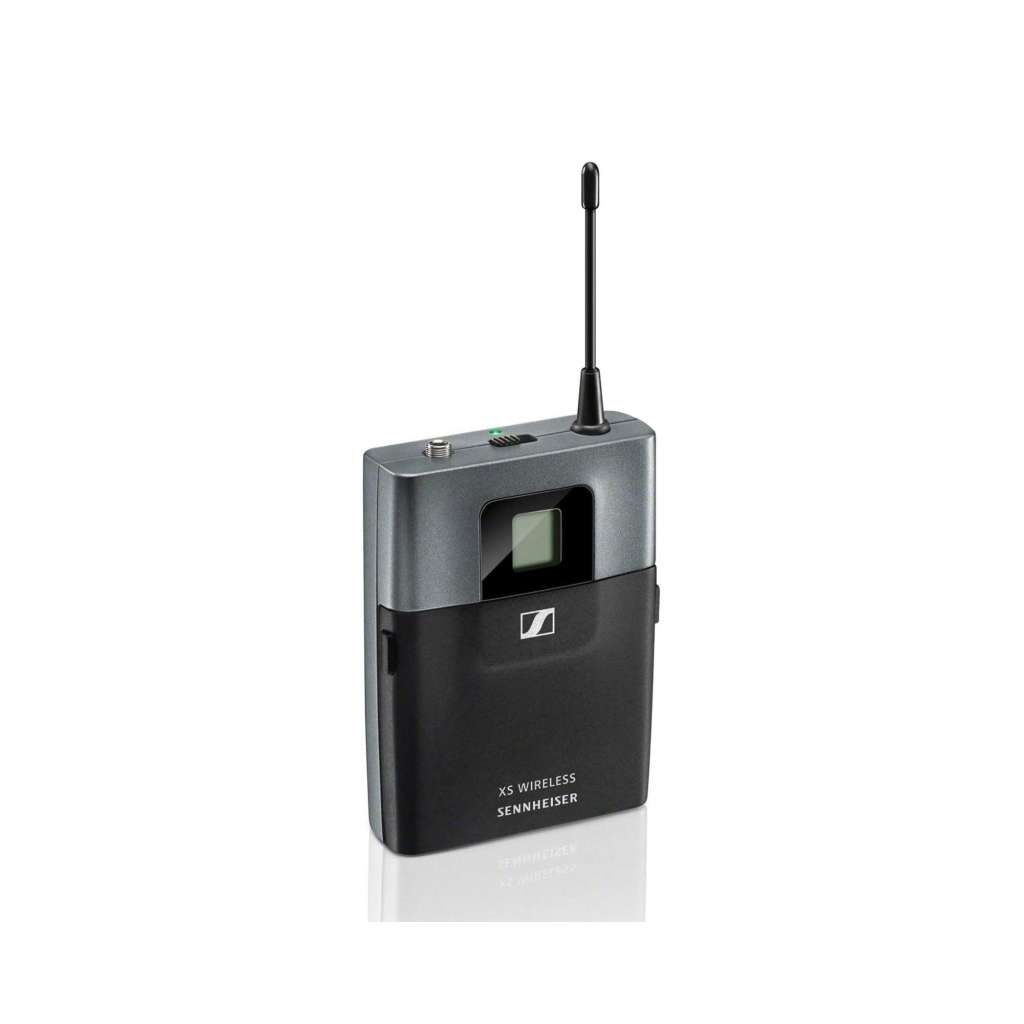
Manufacturers sell each system in several regional tuning ranges, and the UK-relevant variant is not always the default. Verified examples: Shure’s K3E band covers 606 to 630 MHz (Channel 38 plus interleaved spectrum above it) and is the standard UK choice across BLX and similar ranges. Sennheiser’s GB band covers 606 to 648 MHz on the evolution wireless ranges, and 606 to 630 MHz on XS Wireless. If the tuning range printed on the box starts at 606 MHz, it was built for the UK market. If it starts anywhere between 694 and 790 MHz, walk away.
Coordinated Licences: Interleaved TV Spectrum for Big Shows
When ten channels are not enough, Ofcom’s PMSE coordination team will assign you frequencies in the interleaved TV spectrum (the UHF channels between roughly 470 and 702 MHz that are not carrying a TV multiplex at your location), and in higher bands such as 960 to 1164 MHz for suitable equipment. These assignments are site-specific and date-specific, coordinated against TV transmitters and every other PMSE booking in the area, which makes them the only option that gives you actual protection from other licensed users.
This is how West End theatres, festivals, broadcast OBs and large touring productions run 30, 50 or 100-plus channels of radio mics and IEMs in one postcode. Current indicative fees from Ofcom’s published PMSE fee schedule:
| Coordinated product | What you get | Fee |
|---|---|---|
| Single mic frequency, 48 hours | One 200 kHz assignment (470 to 1154 MHz, 10 mW) | £8.50 |
| Whole TV channel, 48 hours | Multi-mic use of one 8 MHz TV channel at one site | £51 |
| Single mic frequency, fixed site, annual | One coordinated assignment at your venue for a year | £28 |
| Whole TV channel, fixed site, annual | Multi-mic use of one 8 MHz TV channel at your venue | £168 |
| Carnet (pre-paid tokens) | 60 or 480 tokens for frequent bookers | £472 / £3,060 (7.5% / 25% saving) |
A theatre that owns its RF, for example, might hold the £75 shared licence for Channel 38 plus a £168-a-year coordinated TV channel at its own address, giving it around 20 protected-plus-shared channels for under £250 a year.
The Other Options: 1.8 GHz, 960 MHz, DECT and 2.4 GHz
UHF is not the only game any more, and for some buyers the alternatives sidestep the congestion problem entirely:
- 2.4 GHz: licence free at 10 mW, used by many digital systems. Zero paperwork and worldwide legality, but it shares the band with Wi-Fi and Bluetooth, so channel counts and range suffer in busy venues. Fine for a handful of channels in a controlled room.
- DECT (1880 to 1900 MHz): the cordless-phone band, used by some digital conference and presenter systems. Licence free, self-coordinating, very reliable for speech applications, less common for music.
- 1785 to 1805 MHz: covered by the same UK Shared licence as Channel 38 (not available in Northern Ireland). A useful overflow band for kit that tunes there, and one of the ranges Ofcom has consulted on making licence exempt.
- 960 to 1164 MHz: shared with aeronautical systems and available via coordinated assignment only, for equipment designed for it. A growing escape valve for high-channel-count productions as UHF tightens.
- VHF (173.7 to 175.1 MHz): licence free, up to about 3 systems, 10 mW handheld or 50 mW body-pack. Old-school but still legal; limited modern equipment choice.
- In-ear monitors follow the same rules: an IEM transmitter is licensed exactly like a radio mic, and it typically runs more power, so it is even more important to get the band right. See our in-ear monitor systems guide for choosing the hardware.
Why Old Kit May Be Illegal: The 700 MHz Clearance
UK wireless audio has been evicted twice in fifteen years, and both evictions left a lot of orphaned equipment in circulation. First, Channel 69 (854 to 862 MHz), the old home of licensed radio mics, was cleared in the 800 MHz sell-off for 4G: Ofcom moved licensed PMSE to Channel 38, and Channel 69 kit became illegal to use at the end of 2012. Then the 700 MHz clearance handed 694 to 790 MHz (TV channels 49 to 60) to mobile networks, with PMSE access ending in 2020. That spectrum now carries 5G traffic.
The practical consequence: any wireless system whose tuning range sits between 694 and 790 MHz, or in the old Channel 69 range, cannot legally be switched on in the UK, and even if you risked it, it would be swamped by mobile base stations. There is no licence you can buy to make it legal.
Buying second-hand or from abroad
eBay, marketplace and overseas listings are full of 700 MHz-era radio mics that look like bargains: cleared UK stock, US-band imports (where wireless bands differ entirely) and EU variants for other countries’ allocations. Before you bid, find the exact band code and tuning range in the listing photos. Anything covering 694 to 790 MHz, or 854 to 862 MHz, is scrap in the UK regardless of condition or brand. If the listing will not show the frequency label, assume the worst. When in doubt, buy a current UK-band system (606 MHz upwards or a licence-free band) from a UK dealer.
Comparison: Which Band Should You Buy?
| Band | Frequency | Licence | Cost | Capacity | Best for |
|---|---|---|---|---|---|
| Channel 70 | 863 to 865 MHz | None | £0 | ~4 systems | Solo acts, small churches, meeting rooms |
| Channel 38 | 606.5 to 613.5 MHz | UK Shared | £75/yr (£135/2yr) | ~10 systems | Bands, schools, theatres, AV companies |
| Coordinated UHF | Interleaved 470 to 702 MHz | Site/event specific | From £8.50/48h, £28/yr per frequency | Dozens of systems | Large productions, festivals, broadcast |
| 2.4 GHz | 2400 to 2483.5 MHz | None | £0 | Few systems, venue dependent | Presenters, rehearsal rooms, travel kits |
| 1785 to 1805 MHz | 1.8 GHz duplex gap | UK Shared (not NI) | Included in £75/yr | Equipment dependent | Overflow channels alongside Ch38 |
Choose Ch70 if
- You need 4 or fewer channels at once
- You mostly work in the same, quiet-RF venue
- You want zero paperwork and zero renewal dates
- Budget handhelds or a single headset system cover the job
Choose Ch38 if
- You run 5 to 10 channels of mics and IEMs
- You gig at different venues and cannot control the RF
- You hire kit out (the licence can cover your hirers)
- £75 a year is cheaper than one dropout mid-show
Choose coordinated if
- You need more than 10 simultaneous channels
- The show cannot tolerate interference from other users
- You are a fixed venue that owns its RF plan
- You are working festivals, broadcast or touring theatre
Whichever route you take, buy the right band variant on day one. A Ch38-band handheld transmitter can usually also tune interleaved frequencies above 614 MHz for coordinated work, so K3E and GB-type bands grow with you; a Ch70-only system never will.
How to Apply: The Ofcom PMSE Portal, Step by Step
- Create an account on the PMSE portal: Go to pmse.ofcom.org.uk (linked from ofcom.org.uk/pmse) and register. Registering and buying online gets you the discounted rate; postal or emailed forms cost more and take longer.
- Buy the UK Wireless Microphone Licence: Select the UK shared licence (sometimes shown as “Buy UK Mic Licence”), choose 1 year (£75) or 2 years (£135) and pay by card. The licence is issued to your name or organisation, covers the whole UK, and includes Channel 38 plus the 823 to 832 MHz and 1785 to 1805 MHz shared ranges.
- Set your kit to the Ofcom channel plan: Programme your receivers to the published Channel 38 10-channel plan (or use the manufacturer’s Ch38 preset bank, which normally mirrors it). This keeps you intermod-safe and makes sharing a venue with another licensee painless.
- Book coordinated frequencies when you need more: For bigger shows, use the same portal to request coordinated frequencies for your site and dates (or email [email protected] for the specialist forms). Ofcom’s coordination team checks TV transmitters and other bookings and issues you protected assignments. Book early for festival season; frequencies at major sites do sell out.
- Diary the renewal: The shared licence does not auto-renew forever; an expired licence means every Ch38 transmitter in the rack is suddenly unlicensed. The 2-year option exists for a reason.
Popular picks from the shop
FAQ
Do I need a licence for a wireless microphone in the UK?
Only if you operate outside the licence-exempt bands. Channel 70 (863 to 865 MHz), VHF 173.7 to 175.1 MHz and 2.4 GHz systems need no licence. Channel 38 (606.5 to 613.5 MHz) needs the £75-a-year UK Shared licence. Everything else needs a coordinated licence, and some bands (694 to 790 MHz) cannot be licensed at all.
How much is a Channel 38 licence?
£75 for one year or £135 for two years when bought online through Ofcom’s PMSE portal (£85 and £155 if processed manually). One licence covers your organisation UK-wide, however many Ch38 systems you own.
How many wireless systems can I run on Channel 70?
Typically about four simultaneously, using well-spaced frequencies such as 863.1, 863.7, 864.1 and 864.9 MHz, and assuming nobody else nearby is using the band. Channel 38 roughly doubles that to around ten on Ofcom’s channel plan.
Does one Channel 38 licence cover my whole band, church or school?
Yes. The UK Shared licence covers the licensee’s equipment anywhere in the UK, and it can also cover people hiring equipment from the licensee. You do not need a licence per microphone or per performer.
Do in-ear monitor transmitters need a licence too?
Yes, IEM transmitters follow exactly the same rules as radio mics, and because they transmit continuously (often at higher power) they are more likely to cause interference if they are on the wrong frequency. Buy in-ear monitor systems in the same band strategy as your mics: Ch70 variants for licence-free use, Ch38/GB-type bands under the shared licence.
Is my old Channel 69 or 700 MHz system still legal?
No. Channel 69 (854 to 862 MHz) has been illegal to use since the end of 2012, and the whole 694 to 790 MHz range was cleared for mobile networks by 2020. No licence can be bought for these ranges, and 5G traffic would wreck the audio anyway. The kit is only good for spares or non-UK markets.
What happens if I use an unlicensed frequency?
Unlicensed transmission is a criminal offence under the Wireless Telegraphy Act 2006. Penalties can run to unlimited fines and imprisonment, and Ofcom can seize equipment. In practice the bigger everyday risk is your show falling over: unlicensed frequencies carry no protection, and mobile-band interference is brutal.
What do band codes like K3E and GB mean when I am buying?
They identify the tuning range of that specific unit. Shure K3E is 606 to 630 MHz; Sennheiser GB is 606 to 648 MHz (606 to 630 MHz on XS Wireless). Both start at Channel 38, which is why they are the standard UK variants. Transmitter and receiver must be the same band, so always match codes when adding to an existing rig.
Shop this guide
UK-band wireless systems in stock, correctly specified for Ch70 or Ch38, with fast UK delivery.
Wireless Systems Handheld Transmitters Lavalier & Headset Mics In-Ear Monitors


