

Home » Guides » Power, Cabling & Connectors »
15A Round Pin and Socket Inserts: Theatre Power Explained
Why UK theatres still run on round pin plugs, how 15A compares with 5A, 2A, 13A and 16A blue, what socket inserts and modular sockets are for, which adaptors to avoid, and how to keep dimmed and non-dim circuits apart.
~12 min read · Updated October 2026 · By the Stage Supply team
In this guide:What 15A round pin is · Why theatres use it · 15A vs 5A, 2A, 13A and 16A · Socket inserts and modular sockets · Adaptors to avoid · Cables and fusing · Dimmed vs non-dim · Inspection and PAT · Checklist · FAQ
What 15A round pin actually is
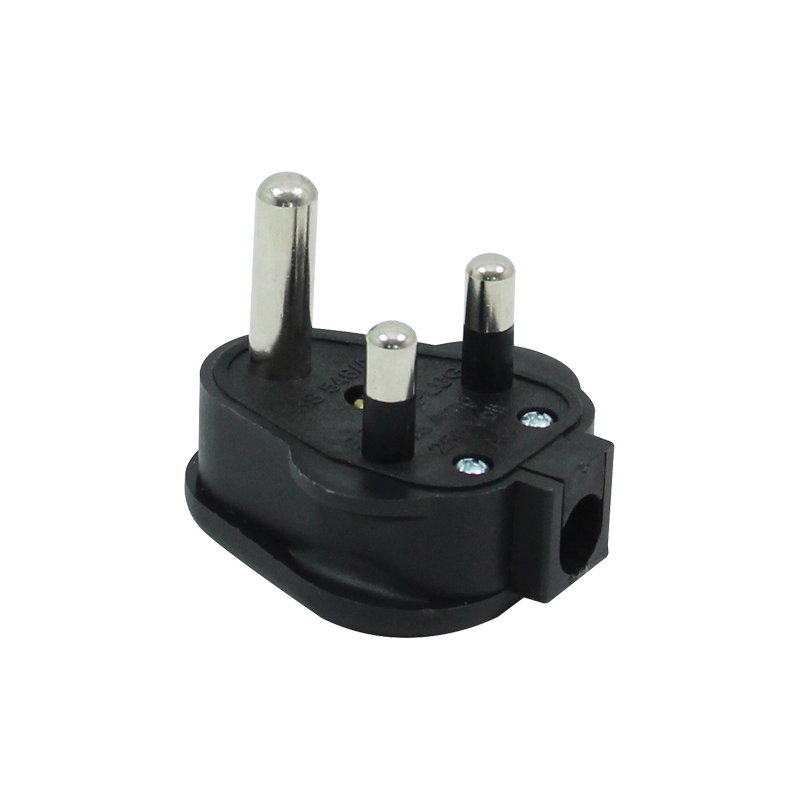
Walk into almost any UK theatre, school hall with a lighting bar, or village hall with a stage, and the lanterns will be fitted with a chunky plug with three round pins in a triangle. That is the 15A round pin plug, made to BS 546, and in a lot of buildings it is still the connector on every outlet the lighting desk controls.
BS 546 is an older British Standard than the familiar square pin 13A system. It covers two pole and earthing pin plugs, socket outlets and adaptors for AC circuits up to 250V, in four current ratings: 2A, 5A, 15A and 30A. All four look broadly alike, with the larger top pin as the earth, but each rating is a different physical size, so a 5A plug will not go into a 15A socket and a 15A plug will not go into a 5A socket. That deliberate non-interchangeability is the whole point of the family.
Two features set the 15A round pin apart from the 13A plug you use at home:
- It has no fuse. Fused BS 546 plugs exist, but they are unusual. A normal 15A round pin plug is unfused, so the protection for the lead and the lantern comes from the circuit it is plugged into: the breaker or fuse in the dimmer rack or distribution board.
- It is rewireable and rugged. Theatre plugs are made to be opened, inspected and reterminated, and the heavy duty rubber versions survive being dropped from a ladder far better than a domestic plug.
At 230V, a 15A connector works out at roughly 3.45kW. In practice the connector rating is rarely the limit. The dimmer channel, the breaker, the cable and the supply behind it decide what you can really draw, as later sections explain.
Why UK theatres use it
The square pin 13A system arrived in the late 1940s and took over homes and offices with the ring main. Round pin plugs did not disappear; they retreated into places where a separate, non-interchangeable connector was useful. Stage lighting was the biggest of those.
Keeping two worlds apart
A theatre lighting outlet is usually fed by a dimmer, and a dimmer does not deliver a clean mains supply (our dimmers and relay packs guide explains why). Using a connector that does not match the building’s 13A sockets gives you a physical barrier in both directions:
- A kettle, a laptop charger or a vacuum cleaner cannot be plugged straight into a dimmed lighting outlet and cooked by it.
- A lantern lead cannot be plugged straight into a general purpose 13A socket, where it would bypass the lighting control and load a circuit that was never planned for it.
- Anyone looking at a bar of 15A outlets knows at a glance that they belong to the lighting system, not the building.
No fuse in the plug, on purpose
A fuse in every plug is a fine idea for a toaster. On a lighting bar seven metres above the stage, a blown plug fuse means a dark lantern until someone can get a ladder or lower the bar, which is rarely during a show. With unfused 15A plugs, all of the protection lives at the dimmer rack, where a tripped breaker can be found and reset. The trade-off is that the cable and plug must be suitable for the full protection rating of the circuit they are on, which is why cable sizing matters so much later in this guide.
Inertia, in a good way
Once a building has hundreds of 15A outlets and a store full of lanterns with 15A plugs, changing format is a large electrical project, so 15A remains the default in many UK theatres, schools and halls. Newer builds and touring rigs increasingly use 16A blue and powerCON TRUE1 for hot power, but you will meet 15A for years yet.
15A vs 5A, 2A, 13A and 16A blue
This table covers the mains connectors you are likely to meet on a UK stage. For the larger ceeform sizes, three phase and Powerlock, see our event power distribution guide.
| Connector | Standard | Fused at the plug? | Where you meet it |
|---|---|---|---|
| 2A round pin | BS 546 | Normally no | Centrally switched lamp circuits in homes and hotel rooms; occasionally small practicals |
| 5A round pin | BS 546 | Normally no | Switched lamp circuits; practical lamps on set; some older or smaller stage installations |
| 15A round pin | BS 546 | Normally no | Dimmer outlets, lighting bars, floor and wall socket boxes in theatres, schools and halls |
| 13A square pin | BS 1363 | Yes, BS 1362 fuse up to 13A | General building sockets, backline, sound kit, small LED rigs |
| 16A blue ceeform | BS EN 60309 | No | Event distros, touring rigs, newer venue installs, hot power to moving lights |
15A vs 5A and 2A round pin
The smaller round pin sizes are lighting circuit connectors. In homes and hotels, 2A and 5A sockets are fed from the lighting circuit so that standard and table lamps come on from the wall switch, and the different plug keeps heavier appliances off that circuit. On stage you will mainly see 5A on practicals: the table lamp or standard lamp on a set that is cued from the desk. The 5A plug will not fit a 15A socket, so plugging a practical into a dimmer needs a proper 15A to 5A adaptor lead made for the job.
15A vs 13A
The 13A BS 1363 plug carries its own fuse, which protects the flexible cable after the plug. Fuses up to 13A are permitted, with 3A and 13A the common values. That fuse is what makes it safe to plug a thin lamp flex into a socket on a 32A ring final circuit. A 15A round pin plug relies on the circuit protection instead, which is fine in a theatre where the circuits were designed for the leads that go on them, and not fine if someone improvises an adaptor that takes the fuse out of the path.
15A vs 16A blue ceeform
The 16A blue connector is BS EN 60309: 230V single phase, two poles and earth, with the earth contact at a set position so it will not mate with other voltages. It is the default on event distros and touring equipment, and IP rated versions suit outdoor work. The two are close in capacity but do not mate; short 16A to 15A adaptor tails are the normal way to run 15A lanterns from a 16A distro.
Old 15A sockets outside the stage
Some older buildings still have 15A round pin sockets on the walls that are not part of a lighting system at all: they are left over from pre ring main wiring. Treat any round pin socket you did not install with suspicion until a qualified electrician has told you what feeds it, how it is protected and whether it is still fit for use.
Socket inserts and modular sockets
Searches for “15A socket insert”, “13A socket insert” or “4 gang” usually mean one of three things: the outlet that fits into a bar or socket box, the housing it sits in, or a trailing gang box.
Inserts and the housings they fit
A socket insert is the outlet itself: the moulded part with the contacts and shutters, made to fit into a housing rather than screw to a wall as a finished socket. On a theatre lighting bar the housing is often part of an internally wired bar (IWB), a length of scaffold tube with the circuit wiring run inside it and outlets spaced along it, terminated in a box at one end.
We stock the Robolights system for this kind of work:
- Smart Socket Sets: a three part body, lid and clamp moulded in ABS that fits standard 48.3mm OD aluminium scaffold tube. Different lids take different outlets: one accepts either a 15A BS 546 round pin or a 13A BS 1363 outlet, another takes a 16A ceeform outlet, and there are single and double D type lids for data or DMX connectors, plus a blank lid.
- 13A socket inserts in black or white, shuttered, in heat resistant thermoset, made to suit the Smart Socket system.
- IWB end terminal boxes in steel, with terminal strips or DIN rail, an internal tube clamp, and an add on terminal kit to take a box beyond 12 circuits.
If you need the 15A round pin outlet to go into a 13A/15A Smart Socket lid, get in touch and we will confirm the matching part before you order.
Building or altering a bar is electrical work
Fitting socket inserts into a bar, wiring an IWB, adding outlets to a socket box or changing what feeds them is work on fixed or semi permanent installations. It should be designed, carried out, tested and certified by a qualified electrician or a competent stage electrician working to BS 7671. This guide explains what the parts are for so you can talk to that person; it is not a set of wiring instructions.
Gang boxes
The “4 gang” most people are after is a trailing socket: a 13A multi outlet box on the end of a lead. We stock heavy duty rubber 1, 2 and 4 gang 13A trailing sockets, and made up cables that put a 13A 2 gang or 4 gang box on the end of a 16A ceeform plug or a TRUE1 connector.
What a gang box does not do is add capacity. Four sockets on one lead still share whatever the lead and the circuit behind it can deliver, and on a 13A plug that is one 13A fuse. Do not plug gang boxes into gang boxes, and never plug a gang box of 13A sockets into a dimmed circuit.
Adaptors: which are useful and which to avoid
Every lighting store has a box of adaptors, and some of them should not be there. The test for any adaptor is simple: after it is plugged in, is every piece of cable downstream still protected by a fuse or breaker that suits it, and is the load going onto a circuit that is meant for it?
Generally sound, used correctly
- 16A plug to 15A socket tails. Run 15A lanterns from a protected 16A distro way, keeping the load within 15A.
- 15A plug to 13A socket tails. The appliance’s own fused 13A plug stays in the path. Non-dim circuits only, unless the load is a plain tungsten lamp.
- 15A plug to powerCON or TRUE1 tails. The usual way to power an LED fixture from a round pin outlet, on a confirmed non-dim circuit.
Treat with care: 13A plug to 15A socket
A 13A plug to 15A socket adaptor lets you run a lantern from an ordinary wall socket. A properly made one has a fused 13A plug, so the fuse caps the load at 13A and protects the lead behind it. The problems come from how they get used:
- Overload and nuisance blowing. Pair two big lanterns, or hang a 15A splitter off the adaptor, and the total can exceed 13A. The fuse does its job and the lights go out mid scene, or a marginal fuse runs hot in a cheap plug.
- Unfused imports. Some adaptors sold online have no proper fuse at all, or a fuse that is not to BS 1362. Without the fuse, a 15A lead and everything after it relies on a 32A ring final circuit for protection. Do not use them.
- Breaking the separation. Once a store has 13A to 15A adaptors, it usually also grows 15A to 13A adaptors, and the two together undo the reason the venue uses round pin in the first place: a kettle can end up on a dimmer, or a rig on a ring main nobody planned for it.
Never use
- Male to male leads of any kind, sometimes made up to back feed a socket box or a bar. They put exposed live pins on the free end. There is no safe way to use one.
- 2A or 5A round pin to 13A socket adaptors. They put appliance loads onto lighting circuits that were wired and protected for lamps.
- Stacked adaptors and cube splitters plugged into each other, or adaptors that leave a plug hanging by its pins off a bar outlet.
- Anything that removes or bridges a fuse, or a plug with the earth not connected.
Cable ratings and fusing basics
Because the 15A plug has no fuse, the lead has to survive whatever the circuit protection allows through it before that protection operates. That is the single most important thing to understand about round pin cabling.
BS 7671 tabulates the current carrying capacity of flexible cables. For single phase AC flex in free air at 30°C, 1.0mm² is given as 10A and 1.5mm² as 16A. That is why ready made 15A extensions, including the Elumen8 ones we stock, use 1.5mm² H07RN-F rubber flex: it matches a 15A or 16A circuit. Tables assume the cable is laid out in air; coiled, bunched or in hot surroundings, real capacity falls, and a cable drum wound up on itself is rated much lower than unwound. Our cable drums guide covers that properly.
The practical rules for a lighting store:
- Never fit a 15A plug to thin flex. A 0.75mm² lamp flex with a 15A plug on it is unprotected on a 15A or 16A circuit. Lantern tails, extensions and splitters with 15A plugs should be 1.5mm² or heavier, in a flex suited to the heat near the lantern.
- Know your dimmer channel rating. Dimmer channels are frequently rated below the 15A connector, and each pack states its own figure. Add up the lamp wattages on every channel, including paired lanterns on a splitter, and keep within it.
- Splitters do not add capacity. A 15A two way splitter shares one channel. Two 1kW lanterns draw roughly 8.7A together at 230V; two 2kW lanterns would overload most channels.
- Long runs lose voltage. For runs of tens of metres, the voltage drop table in our event power distribution guide shows why heavier cable helps.
- Heat at the lantern end. Tungsten lanterns run hot, and cable resting on a hood or lamp housing degrades. Use heat resistant tails at the fixture and dress extensions away from hot surfaces.
For multicore runs that break out to six 15A tails at the bar, our Socapex guide explains circuit loading and fan-outs.
Dimmed vs non-dim circuits, and where LED belongs
The plug does not tell you whether an outlet is dimmed. A 15A outlet on a bar could be a dimmer channel, a channel set to a switched or non-dim mode, or a hot power circuit straight from a distribution board. They look identical.
The rule is short. Tungsten lamps can go on a dimmer. Anything with electronics inside, including LED fixtures, moving heads, hazers, smoke machines, laptops and power supplies, goes on non-dim (hot) power. A dimmer chops the mains waveform, which a filament does not mind and a switch mode power supply does. LED fixtures dim themselves from DMX, so they need a constant supply. We have covered the reasons, the failure modes and switch packs in detail in Dimmers, Relay Packs, and Why LED Fixtures Do Not Dim on a Dimmer Channel, so we will not repeat it here.
What matters for 15A specifically:
- Find out which outlets are which. Ask the venue, check the patch sheet or the labels on the dimmer rack, and confirm on the desk. If nobody knows, assume dimmed.
- Be wary of non-dim modes. Some dimmer racks can set a channel to a non-dim or switched mode. Whether the output is clean enough for electronics depends on the rack, so check the manufacturer’s documentation, and prefer dedicated hot power where the venue has it.
- Label everything. Mark hot power outlets and their extensions differently from dimmed ones, consistently, and record it on the rig plan.
- Do not leave adaptors on dimmed outlets. A 15A to 13A tail or a 15A to TRUE1 tail left plugged into a dimmer channel is an invitation to the next person.
Inspection, testing and PAT
15A leads, splitters, adaptors and lanterns are electrical equipment like any other, and the duty to keep them safe applies to them as much as to a 13A extension. Our PAT testing guide explains what that duty is and how hire and event stock is usually handled. Points specific to round pin kit:
- Include the adaptors. Short tails and splitters are the items most often missed off a register and most often abused.
- Check the plug can reach the tester. Many testers and testing contractors work from a 13A test socket; make sure yours can connect 15A and 5A plugs before test day, using leads made for the purpose.
- Open the plugs on inspection. Rewireable 15A plugs suffer from loose terminals, cord grips that no longer grip, and heat marking on pins. A brown, pitted pin or a scorched socket face means take it out of service.
- Remove failed items from the store rather than leaving them in the bin with a note.
The venue’s fixed installation, including dimmer racks, IWBs and socket boxes, is not portable equipment. It falls under periodic inspection of the installation by a qualified electrician.
A practical checklist
Before a show, a get-in or a term of school productions:
- Find out which 15A outlets are dimmed, which are non-dim, and which are switched, and confirm it on the desk.
- Put every LED fixture, mover, hazer and anything else with electronics on confirmed non-dim power.
- Add up the load on each dimmer channel, including paired lanterns, and keep within the channel rating printed on the pack.
- Check every 15A lead is 1.5mm² or heavier, undamaged, with a cord grip holding the outer sheath.
- Remove male to male leads, 2A or 5A to 13A adaptors, unfused 13A to 15A adaptors and stacked splitters from the store for good.
- Label hot power outlets and extensions differently from dimmed ones.
- Unroll extension drums that are carrying significant load.
- Check that leads and adaptors are on the inspection register and in date.
- Look for scorching or discolouration on socket faces and plug pins, and report anything on the fixed installation to the venue.
- For any change to bars, socket boxes or the circuits behind them, book a qualified electrician.
For a wider pre-gig routine covering RCDs, extension leads and venue sockets, see our stage power checklist. If your hall sits on a building site style supply, the yellow connector is covered in 110V site power.
Popular picks from the shop
Robolights 13A Socket Insert, BlackView product →Masterplug HDPT15B 15A Round Pin Mains PlugView product →Elumen8 1.5m 1.5mm 15A Male to 15A Female CableView product →Robolights Black Smart Socket Set for 13A/15AView product →
Frequently asked questions
Can I plug an LED par into a 15A outlet?
Only if that outlet is confirmed non-dim. The connector tells you nothing about what feeds it. On a dimmer channel an LED fixture can flicker, buzz, reboot or be damaged. Use a 15A to powerCON or TRUE1 tail, or a 15A to 13A tail for a fixture with a 13A plug, on hot power.
Are 13A to 15A adaptors safe?
A properly made one with a BS 1362 fused 13A plug is a reasonable way to run a single lantern from a wall socket, as long as the total load stays well within 13A. Unfused adaptors should not be used at all, and a store full of adaptors in both directions undermines the reason a venue uses round pin. If you need lighting power regularly, ask an electrician about proper outlets.
What is the difference between 15A and 16A?
They are different connector systems. 15A round pin is BS 546 and unfused; 16A blue is BS EN 60309, the ceeform connector used on event distros and newer installations. The capacities are similar but the plugs do not mate, so you need a purpose made adaptor tail to go between them.
Can I fit socket inserts to our lighting bar myself?
Not unless you are a competent electrician. Adding or changing outlets on a bar, an IWB or a socket box is work on an electrical installation that must be designed, tested and certified to BS 7671. We can supply the Robolights parts your electrician specifies.
Do round pin leads need PAT testing?
The legal duty is to keep electrical equipment safe, and inspection and testing is the normal way to show that you have. 15A leads, splitters and adaptors belong on the same register as everything else, and they deserve frequent visual checks because rewireable plugs work loose.
How many lanterns can I put on one 15A circuit?
As many as the dimmer channel, breaker and cable allow, which is often less than 15A. Add up the lamp wattages and divide by 230 to get the current. Two 1kW lanterns draw about 8.7A; check the figure printed on your dimmer pack before you pair anything heavier.
Shop this guide
Round pin plugs, 15A extensions and adaptor tails, Robolights sockets and terminal boxes, gang boxes and switch packs are all in our cables and power range.
Power CablesPower Distribution13A Plugs & SocketsDimmer & Relay Packs



