


Home » Guides » Drums & Percussion »
Snare Wires Explained: Strand Count, Straps and Snare Beds
The cheapest part of a drum kit that makes an audible difference, and the one nobody thinks about until a strand snaps in soundcheck.
~7 min read · Updated September 2026 · By the Stage Supply team
In this guide: Short answer · What they do · Strand count · Straps and plates · The three sets · The snare bed · When to replace · Shop the range · FAQ
A set of wires costs less than a tank of fuel and changes the snare more than most people expect. This guide explains what strand count does to the sound, why the end plates and straps matter more than the wire itself, and which of the three PureSound sets suits which drum.
The short answer
Custom Pro Steel 20 strand is the default and the one most techs carry, largely because of the speed release straps. Go to Blaster 20 strand if you want more volume and projection from a loud stage, and Super 30 strand if your snare has a wide snare bed and you want maximum sensitivity. All three are 14 inch, which fits a 14 inch snare drum.
What snare wires actually do
A set of snare wires is a row of coiled steel springs held between two end plates, stretched across the underside of the snare drum against the thin snare side head. When you strike the batter, the bottom head moves, the wires rattle against it, and that rattle is the crack that distinguishes a snare drum from a tom.
Because the wires work against the resonant head, they are only ever as good as the head under them. A 3mil snare side head that has been on the drum for years will deaden any set of wires you buy. Change both together.
Strand count
The strand count is how many individual coils span the drum. It is the main tonal variable, and the trade-off runs in one direction.
- Fewer strands means each strand carries more of the work, giving a drier, more focused and more articulate sound with less spread. Easier to record, easier to place a close microphone on, less sympathetic buzz from the bass guitar and the floor tom.
- More strands means more contact with the head, so more sensitivity at low dynamics, a fuller sound and more sustain in the snare itself. Better for ghost notes and brushwork, and more prone to buzzing along with anything else on stage.
Twenty strands is the standard and the safe choice. Thirty is a specialist option, and it has a physical requirement attached, covered below.
Straps, end plates and the fittings that matter
The wires themselves are broadly similar between makers. What separates one set from another in daily use is the hardware at each end.
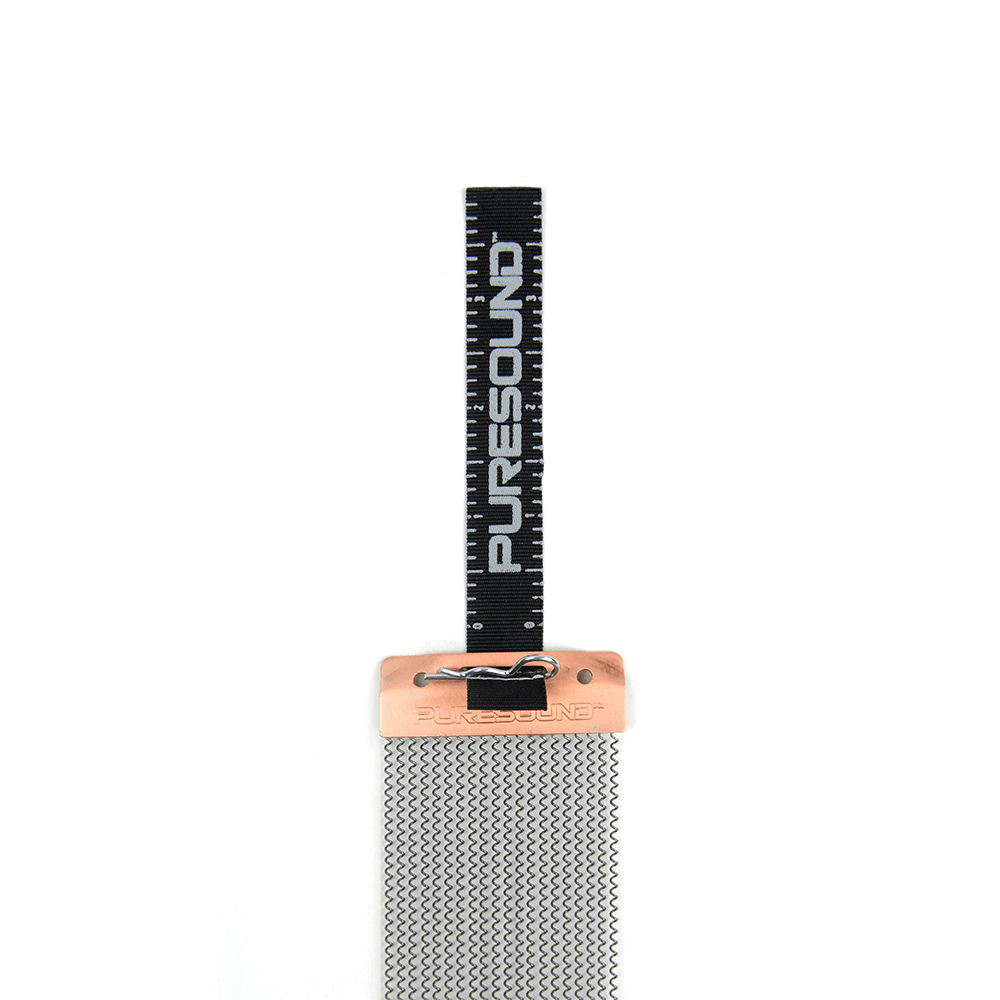
- Speed release straps. On the Custom Pro, the straps let you take the wires off without unthreading anything, which turns a snare side head change from a fiddly job into a quick one. They also carry numbered alignment marks, so the wires go back in the clamp straight and in the same position as last time. For a tech doing this in the dark between bands, that is the whole argument.
- Anti-choke end plates. Also on the Custom Pro. They lift the coils away from the edge of the resonant head, which cuts sympathetic buzz and lets you tension the wires harder without choking the drum. Choking is the common failure of over-tightened wires: the drum goes tight and lifeless and people blame the head.
- Angled end plates and bent end clips. The Blaster approach. The angled plates put more of the wire in contact with the head across its length, and the bent clips lift projection. This is a set designed for volume and intensity rather than subtlety.
- Cord or strap. Most modern throw-offs take either. Strap is more consistent and quicker; cord gives a slightly looser feel some players prefer. Both are supplied with these sets.
The three sets we stock
| Set | Strands | Character | Best for |
|---|---|---|---|
| Custom Pro Steel | 20, steel coil | Crisp and resonant, with the snare wires dominant in the overall sound | The all-round default. Speed release straps and anti-choke plates make it the tech’s choice |
| Blaster | 20, medium gauge | More volume and intensity, quick and crisp response, greater projection | Loud stages, rock and function work |
| Super 30 | 30, medium gauge | Powerful, penetrating presence with increased response and articulation | Sensitivity and ghost notes. Requires a wide snare bed, see below |
All three are 14 inch, designed and manufactured in the USA, and made to an even tension across the set, which is what stops one strand sitting proud and buzzing on its own.
The snare bed, and why Super 30 is not for every drum
The snare bed is the shallow dip cut into the bearing edge of the shell at the two points where the wires cross it. It lets the wires sit flat against the head instead of being held off it at the edges. Its width varies by manufacturer and by model.
This matters because Super 30 is slightly wider than a standard set, and PureSound specify that it works best with a snare bed of 3 to 3.5 inches. Fit it to a drum with a narrow bed and the outer strands sit off the head, which gives you an uneven response and the worst of both worlds. If you do not know your drum’s bed width, the 20 strand sets are the safe answer.
When to replace them
A single broken or bent strand ruins a set, because that strand either buzzes independently or stops touching the head at all and throws the tension across the rest. There is no repairing it. The other signal is a set that has lost its snap: the coils stretch over time and stop returning cleanly.
Wires are cheap and take five minutes to change, which is why a spare set belongs in any working stick bag or backline box alongside a spare snare side head and a drum key. A snare with a broken strand is not a drum you can finish a show on.
The snare wires we stock
PureSound Custom Pro Steel, 20 strand, 14 inchView product → PureSound Blaster, 20 strand, 14 inchView product → PureSound Super 30, 30 strand, 14 inchView product → Evans Clear 300 snare side head, 14 inchView product →
Shop the range
Snare wires, and the snare side heads they work against.
Stocked in our own warehouse for next-day UK delivery, with trade counter collection available. Anything in the D’Addario, Evans, ProMark or PureSound catalogue that we do not shelve, we can order in, so ask us if you cannot see it.
Frequently asked questions
How tight should snare wires be?
Tight enough that the response is crisp, loose enough that the drum still rings. Tighten until the buzz disappears, then back off slightly. If the drum sounds strangled and short, the wires are choking it, and the anti-choke end plates on the Custom Pro exist precisely because that is such a common mistake.
Why do my snare wires buzz when the bass plays?
Sympathetic resonance. The bass note excites the snare head and the wires rattle along with it. Some of it is unavoidable and inaudible in a mix. Reducing it: adjust the snare tuning slightly, make sure the wires are centred and even, and use a 20 strand set rather than a 30.
Can I use 14 inch wires on a 13 inch snare?
No. The wires must match the drum diameter so they sit correctly across the snare beds. We stock 14 inch, which covers the overwhelming majority of snares, and can order other sizes in.
Strap or cord?
Strap for consistency and speed, and speed release straps in particular if you change heads often. Cord has a slightly different feel that some players prefer. Both work on most throw-offs, and both are supplied.


