


Home » Guides » Instrument Accessories »
Tuners, Capos, Straps and the Accessories Worth Carrying
A tuner you can read on a dark stage. A capo that does not pull the guitar sharp. A strap that stays on the button. None of it is glamorous and all of it decides how the night goes.
~7 min read · Updated September 2026 · By the Stage Supply team
In this guide: Short answer · Clip-on tuners · Capos · Straps and locks · Acoustic feedback · What to carry · Shop the range · FAQ
None of this is the kit anyone talks about after a show, and all of it is the kit that gets noticed when it fails. This guide takes the tuners, capos, straps and locks we hold, explains what separates the versions of each, and says which to buy for what.
The short answer
For tuners, Eclipse if you want a reliable clip-on cheaply, Eclipse Rechargeable if you are tired of coin cells, and Micro if it needs to be invisible from the front or you tune on a loud stage. For capos, Artist for a standard six-string, Pro Plus if you play a twelve-string or a classical. And fit strap locks, because the guitar you drop is always the expensive one.
Clip-on tuners
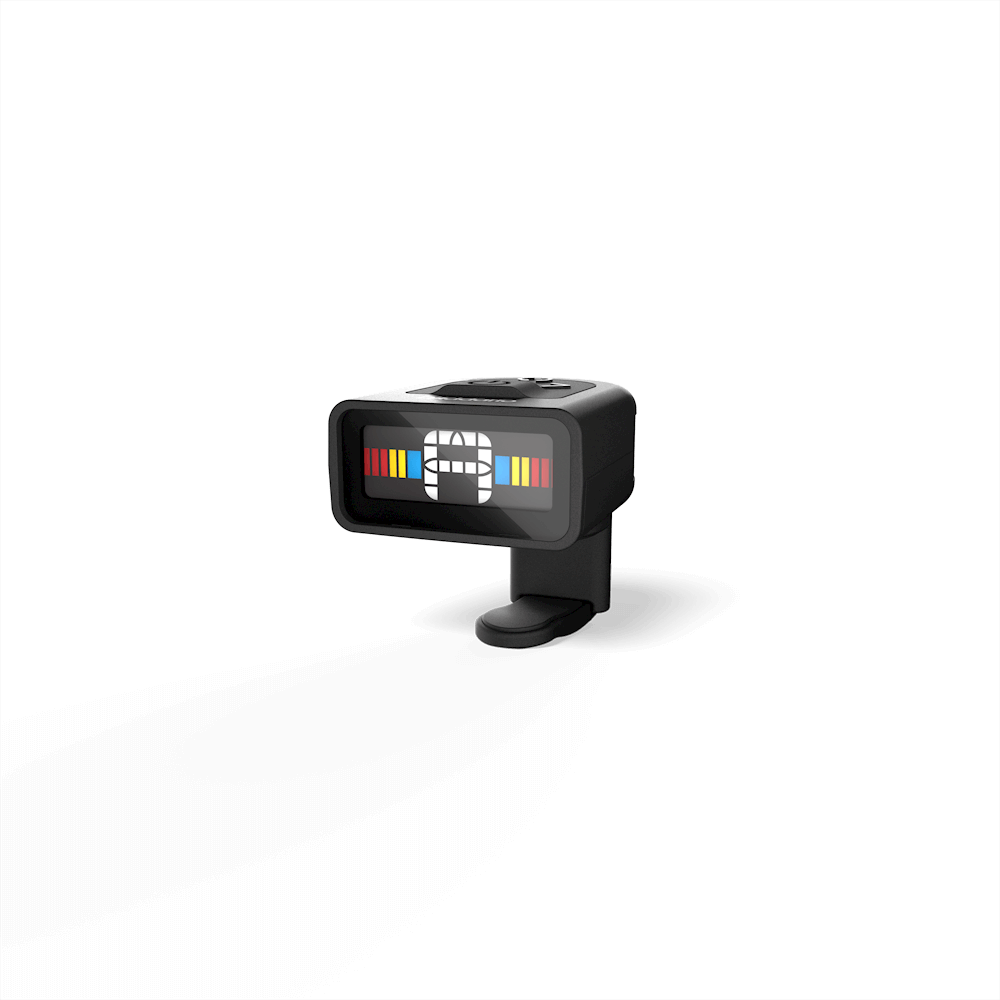
All three clip to the headstock and read the string through the vibration of the instrument rather than through a microphone, which is why they work in a noisy room where a phone app does not. The differences are display, power and how much noise they cope with.
| Tuner | Display | Power | Calibration range | Notable |
|---|---|---|---|---|
| Eclipse | Full colour, vertical, multi-swivel | CR2032, included | 435 to 450 Hz | The value option. Mounts front or back of the headstock, left or right handed |
| Eclipse Rechargeable | Extra bright, multi-swivel | Rechargeable, up to 24 hours per charge, USB-C lead included | Not stated | No batteries to carry or forget |
| Micro Headstock Tuner | Full colour, four orientations, two vertical and two horizontal | CR2032, included | 410 to 480 Hz | Hides behind the headstock. Improved piezo for tuning in noisy environments, ratchet clamp holds during a show |
Two points before you choose.
- Calibration range is not a gimmick. It is the reference pitch the tuner calls A. Almost everything in the UK works at 440 Hz, so any of these is fine for normal use. The Micro’s wider 410 to 480 Hz range matters if you play with a fixed-pitch instrument that is not at 440: a church organ, a period ensemble, or a piano that has drifted and cannot be tuned before the show.
- Noisy environments are the real test. Clip-on tuners read vibration, but a loud stage shakes the whole instrument, and a cheap tuner will chase the bass guitar. The Micro is the one specified for that, which is why it is the one to put on a hire guitar or a touring instrument.
Capos
The complaint about capos is always the same: it pulls the guitar sharp. That happens when a capo applies more pressure than the strings need, or applies it unevenly across a curved fingerboard, so some strings get pushed further than others. Ours address it in different ways.
- Artist Capo. A patented Tri-Action trigger geometry that reduces the force needed to open and close it while applying even tension regardless of neck profile, plus a micrometer adjuster so you can dial the pressure to the minimum that works. It presses straight down rather than pulling sideways, which is the other cause of a capo knocking a guitar out of tune. FlexFit pads apply individual pressure per string to account for gauge and fingerboard radius. Lightweight aluminium, and it has a pick holder built in. For six-string electric and acoustic.
- Pro Plus Capo. Built around the FlexFit pad, which flexes to the shape of the fingerboard the way a finger does. That is what lets one capo work on everything from a flat classical fingerboard to a vintage electric with a 7 inch radius. It is also the one to use on a twelve-string, or anything with octave string pairs, because the pads accommodate the different gauges sitting next to each other. A Ned Steinberger design.
Straps and strap locks
Three straps, covering three different problems.
| Strap | Material | Adjustment | For |
|---|---|---|---|
| Polypropylene | Heavy-duty polypropylene webbing with leather ends | 35 to 59.5 inches | The workhorse. Cheap, strong, and the right answer for a spare or a hire instrument |
| Auto Lock | Soft nylon with an integrated spring-loaded latch | 30 to 55 inches | Strap security with no hardware to fit. Slide it over the button and it clamps itself |
| Bass strap, 3 inch | Polypropylene with an internal pad and leather ends | 43 to 58 inches | Heavy basses. The width and the pad spread the load across the shoulder |
The Auto Lock solves a particular problem. It gives you strap-lock security without modifying the guitar at all: the grey latch is spring-loaded, so it clamps down on a standard strap button as you slide it on and does not release until you push it back. It works with most strap buttons on the market, so it suits a borrowed or hired instrument where fitting hardware is not an option.
If you would rather convert the guitar properly, the Universal Strap Lock System replaces the buttons and installs on the strap without tools. Either way, fit something. A strap coming off a button is the commonest way a guitar gets damaged on stage, and it always happens mid-song.
Acoustic feedback on stage
An electro-acoustic at volume feeds back through its own soundhole: the body resonates, the pickup hears it, and the loop howls at a low frequency that is very hard to EQ out without gutting the instrument.
The Screeching Halt soundhole cover blocks that loop at source. It is a tapered plug with a soft rubber insert that is safe on a guitar finish, it fits a range of soundhole sizes, and it needs no modification: push it in and take it out. It lets you run considerably more stage volume before the guitar takes off. The general principles behind feedback are in how to stop feedback.
What to actually carry
A working gig bag, in order of how often it saves the night:
- A spare set of strings in your gauge, sealed. See string gauges explained.
- More picks than you think, in one gauge. See guitar picks explained.
- A clip-on tuner, and a spare CR2032 if it takes one.
- A Pro-Winder, which is winder, cutter and bridge pin puller in one.
- A multi-tool for truss rod and hardware adjustments.
- A spare instrument lead. See instrument cable vs speaker cable.
- Cable ties, so the spare lead is usable rather than a knot.
- Strap locks already fitted, not in the bag.
The accessories we stock
D'Addario Micro headstock tunerView product → D'Addario Artist capoView product → D'Addario universal strap lock systemView product → D'Addario Auto Lock guitar strapView product →
Shop the range
Tuners, capos, straps and the rest of what belongs in a gig bag.
Stocked in our own warehouse for next-day UK delivery, with trade counter collection available. Anything in the D’Addario, Evans, ProMark or PureSound catalogue that we do not shelve, we can order in, so ask us if you cannot see it.
Frequently asked questions
Are clip-on tuners accurate enough for studio work?
For setting up before a take, yes. For intonation work, use a strobe or a plug-in, because you are chasing single cents there. On stage a clip-on is the practical choice because it keeps working when the room is loud.
Why does my guitar go sharp when I use a capo?
Too much clamping force, or force applied unevenly across a curved fingerboard. Use a capo with adjustable tension and set it to the least pressure that gives a clean note, and place it just behind the fret rather than on top of it.
Do strap locks fit any guitar?
The Universal Strap Lock System replaces the existing buttons and installs on the strap without tools, so it suits most instruments. If you do not want to change the buttons at all, the Auto Lock strap clamps onto standard buttons instead and works with most of them.
Will a soundhole cover change my acoustic tone?
Through a pickup and a PA, very little, and much less than the EQ surgery you would otherwise need to stop it feeding back. Acoustically in a room, yes, obviously, so take it out when you are not amplified.
How long do the tuner batteries last?
A CR2032 lasts a long time in normal use, and both battery tuners include one. If forgetting spares is your failure mode, the Eclipse Rechargeable holds up to 24 hours of tuning per charge and takes a standard USB-C lead.


