
Home » Guides » Rigging & Trussing » Chain Hoists for Stage Rigging: The UK Buying Guide

Chain Hoists for Stage Rigging: The UK Buying Guide

Manual against electric, working load limits, how much chain you actually need, what LOLER requires once you own one, and the honest limits of what a hand hoist should be asked to do over a stage.

~9 min read · Updated August 2026 · By the Stage Supply team
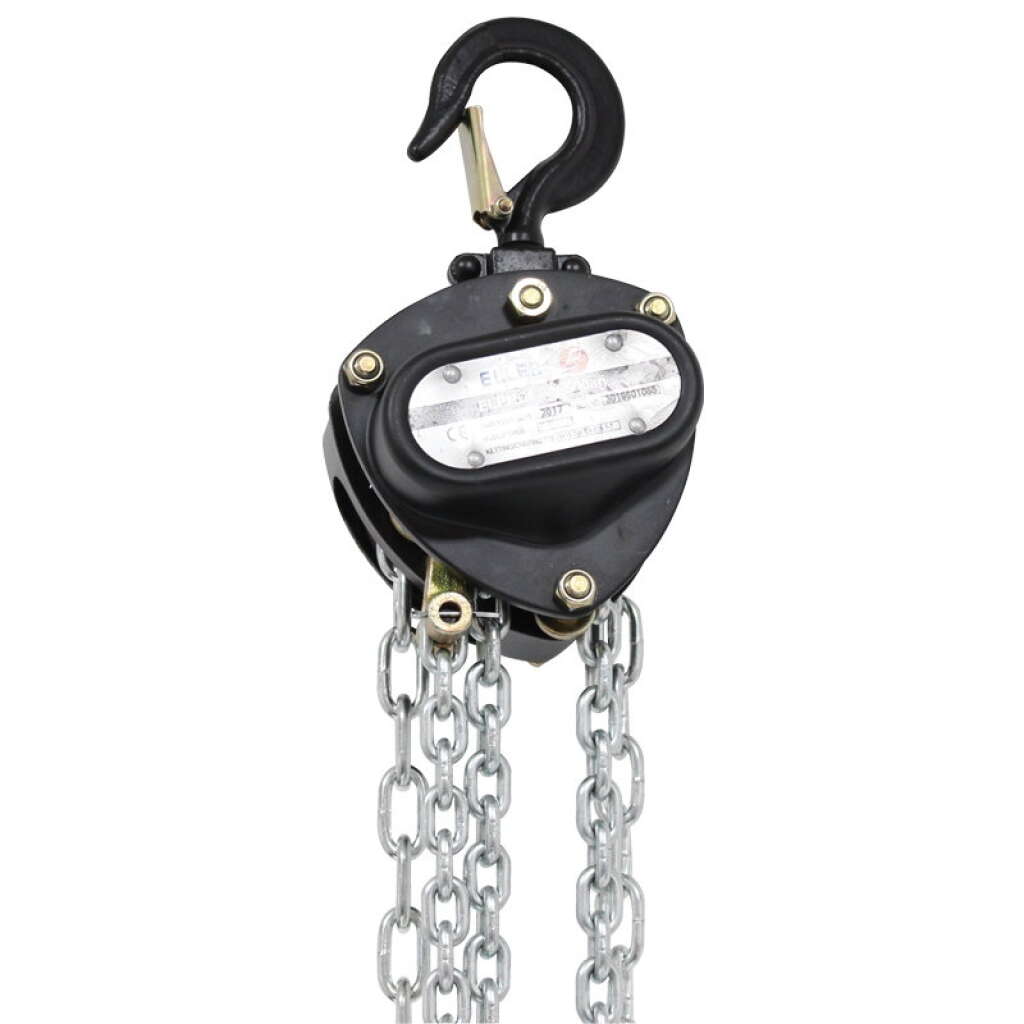
ELLER PH1 manual chain hoist for stage rigging

In this guide: Short answer · Manual vs electric · Working load limit · Chain length · LOLER and inspection · The ELLER range · Accessories · Comparison · Picks · FAQ

Every truss that leaves the ground does it on a hoist, and the chain hoist is where rigging budgets should never be squeezed. The good news is that proper kit is not expensive: a professional-grade manual hoist costs less than many of the lights it will lift. This guide covers what to buy and what the law expects of you afterwards — because unlike most stage kit, lifting equipment comes with statutory obligations attached.

First, the disclaimer that is not boilerplate: rigging is the part of this industry that kills people when it goes wrong. A guide sells you the right hoist; it does not make anyone a rigger. Loads over people need competent, trained persons, engineered suspension points and secondary safeties. If any of that sentence is unfamiliar, hire a rigger before you hire a hoist.

The short answer

For lifting truss, lighting bars and PA in venues and on productions where the load goes up, gets secured, and comes down after the show: a manual chain hoist with a working load limit comfortably above your calculated load, chain long enough for the full lift plus slack, from a manufacturer that publishes real ratings — which in our stock means ELLER. Electric hoists earn their money when loads move during shows, when you rig daily, or when weight and height make hand-chaining impractical — we supply them to order.

Manual vs electric

A manual hoist is a gearbox you drive with a hand chain. It is cheap, light, silent, needs no power at height, and has almost nothing on it to go wrong — which is why manual hoists remain the backbone of venue and small-production rigging. The costs are time and sweat: a 6-metre lift at 500 kg means a lot of hand-chaining, multiplied by every point you rig.

Electric chain hoists put a motor on the same job and add three things worth paying for when you need them: speed (a rig-out at midnight goes very differently with eight motors than eight hand chains), synchronised multi-point lifts from a controller, and the ability to move loads during a performance. That last one drags in the D8/D8+/C1 classification system for entertainment hoists — a plain D8 unit must not hold a load over people without a secondary, a D8+ may hold static loads over people, and only C1-class kit is rated to move loads over people. If your ambitions include moving trusses over an audience, the hoist is the start of a conversation about control systems and inspection regimes, not a checkout click. Call us and we will spec it properly.

Working load limit: how to size a hoist

The working load limit (WLL) is the maximum load the hoist is rated to lift in normal service — 250 kg, 500 kg and 1,000 kg are the standard entertainment sizes. Sizing is not “what does my truss weigh”; it is the truss plus everything on it: fixtures, cabling (heavier than everyone estimates), clamps, safeties, drapes and rain load if outdoors. Add the distribution question — two hoists on a truss do not neatly carry half each once the load is uneven — and you understand why professional practice is to size with generous margin and never, under any circumstances, to rely on the fact that hoists are built with their own internal safety factor. The safety factor is the manufacturer’s; the WLL is your ceiling.

In practice: a 250 kg hoist covers lightweight lighting bars and drape tracks; 500 kg is the standard venue truss hoist; 1,000 kg covers PA flying and heavier production trusses. If your calculation lands near a hoist’s limit, buy the next size up — the price difference is small and the margin is not.

How much chain do you need?

Chain length is the lift height, full stop — a hoist with 6 m of chain lifts a load 6 metres. Buy for the tallest venue or point you rig, not your average one: the standard lengths in our range are 6, 9 and 12 metres, and the price steps between them are modest. Remember the hoist hangs from a suspension point above the load, so what matters is the distance from hook to trim height, and running out of chain two feet short of trim is a mistake nobody makes twice. When in doubt, take the 9 m.

LOLER, PUWER and inspections: what owning a hoist obliges you to do

In the UK, lifting equipment used at work falls under LOLER (the Lifting Operations and Lifting Equipment Regulations 1998) and PUWER. The practical obligations: lifting operations must be planned and supervised by competent people; equipment must be marked with its WLL; and everything needs periodic thorough examination by a competent person — at least every 12 months for lifting equipment such as hoists, and every 6 months for lifting accessories (slings, shackles, steels), unless a written examination scheme says otherwise. Keep the reports; an inspector, a venue, or an insurer after an incident will ask for them. Pre-use checks — chain condition, hook deformation, brake function, twisted falls — are on you every time it goes up.

This is also the argument for buying new, certificated kit over marketplace bargains: an unbranded hoist with no documentation cannot demonstrate conformity, and the money you saved disappears at the first thorough examination — if an examiner will pass it at all.

The ELLER range we stock

ELLER is a rigging brand built for the entertainment industry, and its manual hoists are standard issue in European touring and venue stock. The PH1 is the professional workhorse, available at 500 kg and 1,000 kg WLL with 6, 9 or 12 m of chain. The PH2 is a lighter 250 kg development of the PH1 — the one to carry up a ladder all day. And the ELLER Mini is the specialist: 250 kg with 10 m of chain at just 7.3 kg including the chains, made for working at height in tight spots where a full-size hoist is impractical.

The accessories that are not optional

A chain bag keeps the slack chain captive instead of hanging in a loop over someone’s head or piling on the deck — fit one per hoist and stop thinking about it. Beyond the hoist itself you will need rated slings or steels to the structure, shackles, and secondary safeties for anything suspended over people; all live in our rigging department, and all of it is accessory-class kit on the 6-month examination cycle noted above.

Range comparison

Model WLL Chain lengths Best suited to
ELLER Mini 250 kg 10 m Work at height, tight spaces — 7.3 kg all-in
ELLER PH2 250 kg 6 / 9 / 12 m Lighting bars, drape track, frequent handling
ELLER PH1 500 kg 6 / 9 / 12 m The standard venue truss hoist
ELLER PH1 1,000 kg 6 / 9 / 12 m PA flying, heavier production truss
Electric (to order) Various To spec Daily rigging, synchronised or moving lifts — ask us

Popular picks from the shop

Frequently asked questions

What size chain hoist do I need for stage truss?

Total the real load — truss, fixtures, cabling, clamps, safeties — share it across your points allowing for uneven distribution, and pick a WLL with comfortable margin above the worst-case point load. 500 kg is the standard venue truss hoist; 250 kg covers light bars and drapes; 1,000 kg covers PA and heavy production truss. Near the limit, buy the next size up.

Do chain hoists need to be inspected in the UK?

Yes. Under LOLER, hoists used at work need a thorough examination by a competent person at least every 12 months, and lifting accessories such as slings and shackles every 6 months, plus documented pre-use checks. Keep the examination reports — venues and insurers ask for them.

Can I lift loads over people with a manual chain hoist?

Lifting operations over people need competent planning, engineered points and secondary suspension, whatever the hoist. The D8/D8+/C1 classifications for entertainment hoists formalise this for powered kit: only C1-class systems are rated to move loads above people during a show. If your production involves anything moving over an audience, involve a rigger and speak to us about the right classification of kit.

How much chain do I need on a hoist?

Chain length equals maximum lift height, measured from the suspension point to the lowest position the hook must reach. Buy for your tallest venue: the standard 6, 9 and 12 m options are close enough in price that under-buying is a false economy. Fit a chain bag so the slack fall stays captive.

Are cheap unbranded chain hoists safe?

A hoist with no documentation cannot demonstrate its rating, will struggle at its first thorough examination, and puts every kilogram it lifts on your liability. Professional manual hoists from rated manufacturers cost from around the price of a single moving head — against what hangs from them, and what stands underneath, it is the cheapest insurance in the building.
